In Peru, paying for private school definitely has its perks. You get the fancier technology, better opportunities, nicer uniforms, more linguistic options, higher standards, better options in the future…etc. Often times, public schools due to funding and location get whatever the government, teachers, or community happens to provide. In public schools, you may not have all the best resources, but you can still have the best teachers and students.
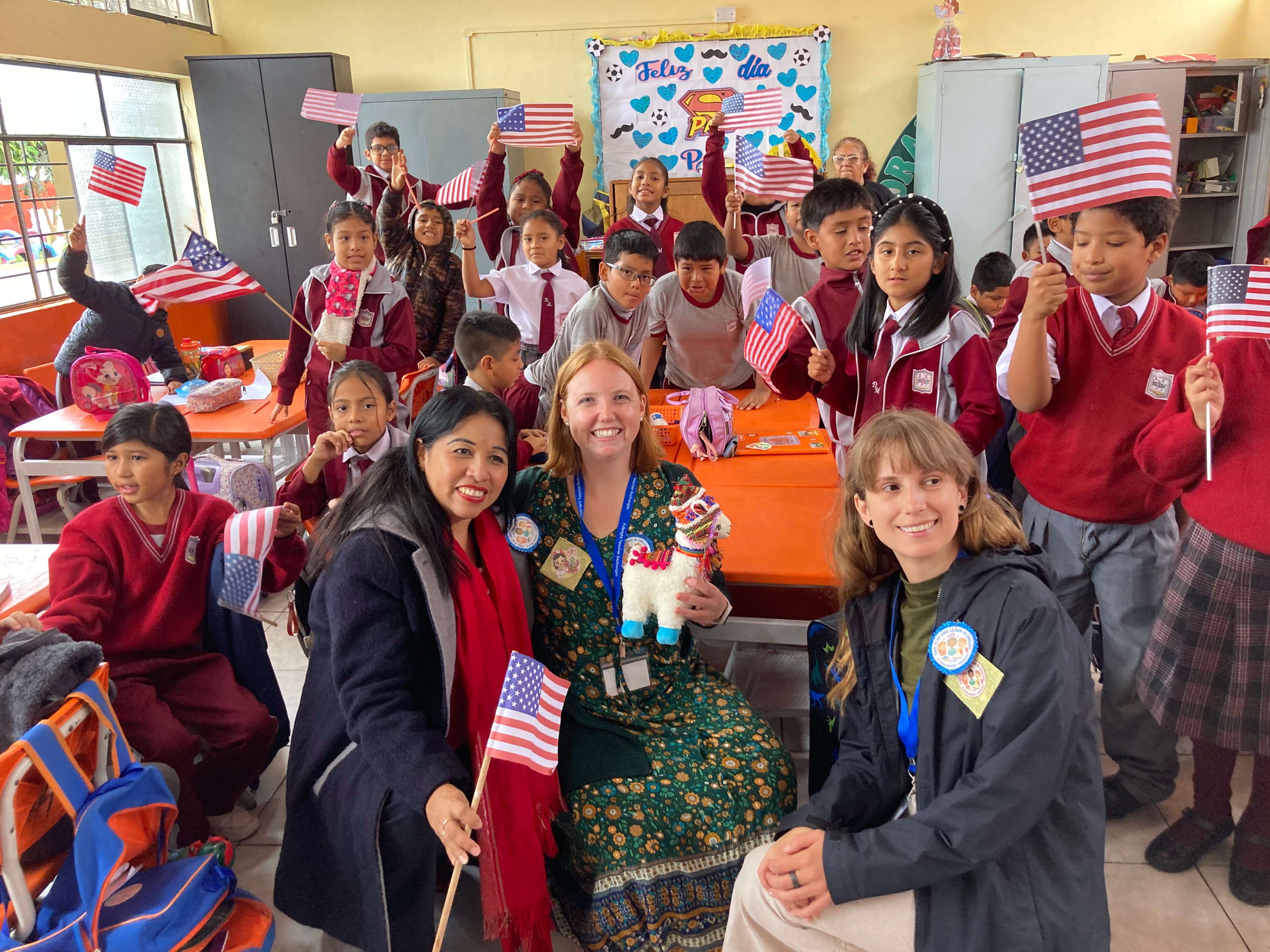
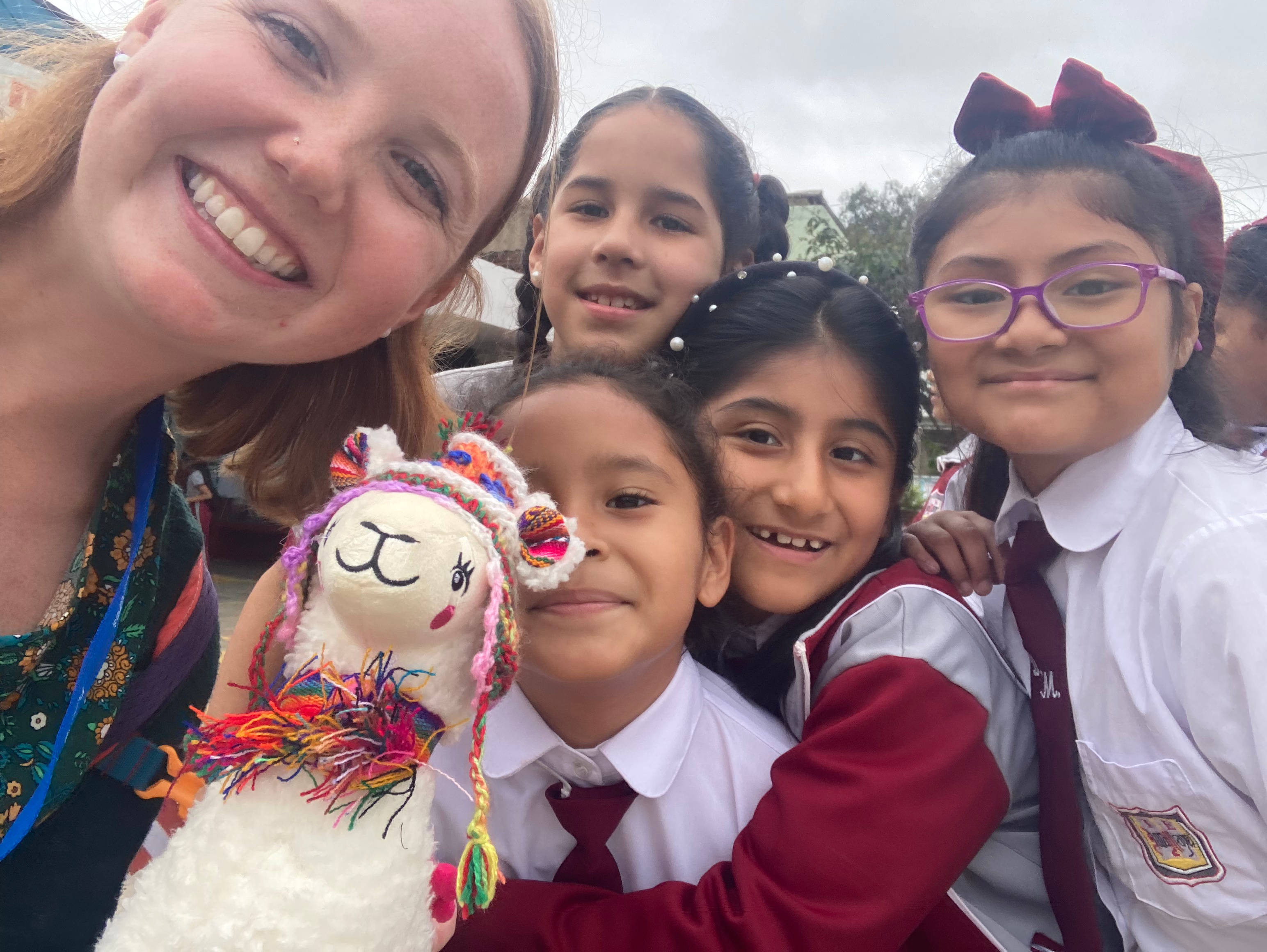
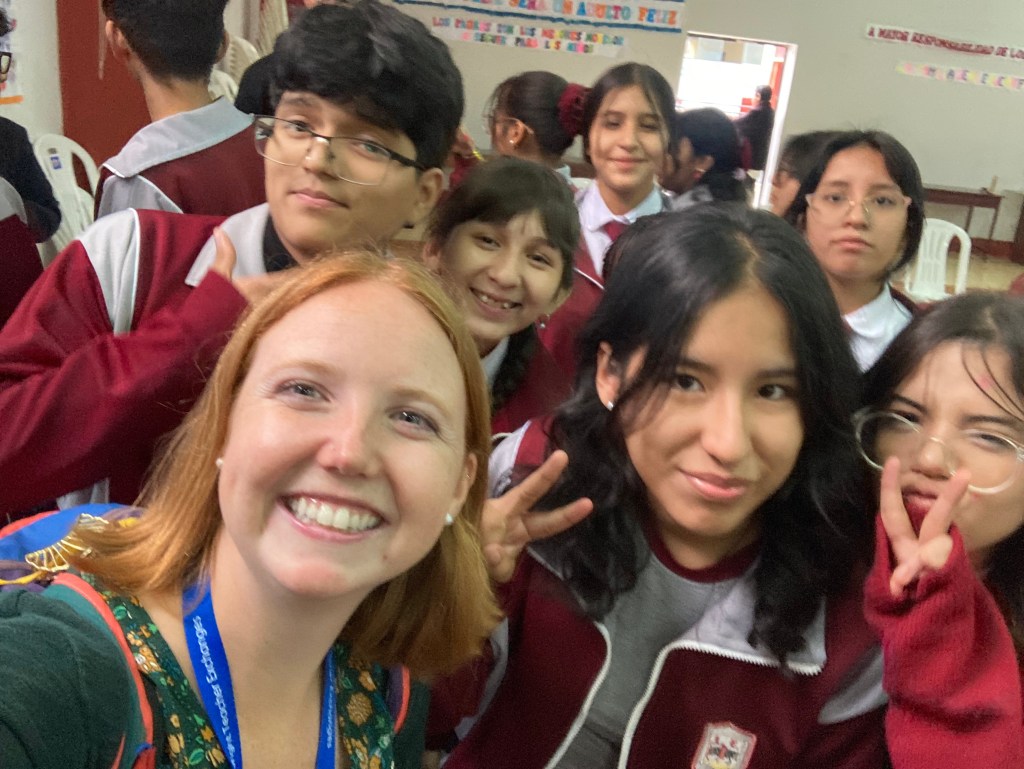
In public schools, people know resourcefulness and resilience. And this Fulbright for Global Classrooms exchange feels like a difference maker project for some of these kids. I know this because of the excitement oozing through the halls upon our arrival, understood it every time I heard “Teacher, Teacher can we take a photo?!” or “Teacher, teacher I so happy you are here!”. I knew it when the parents worked into the night preparing food for our arrival and this difference culminated through little hands dragging us all around the building and ended with their warm embrace. For a lot of these kids they had never met a native English speaker nor an American. This trip, meant the world for both them and us.
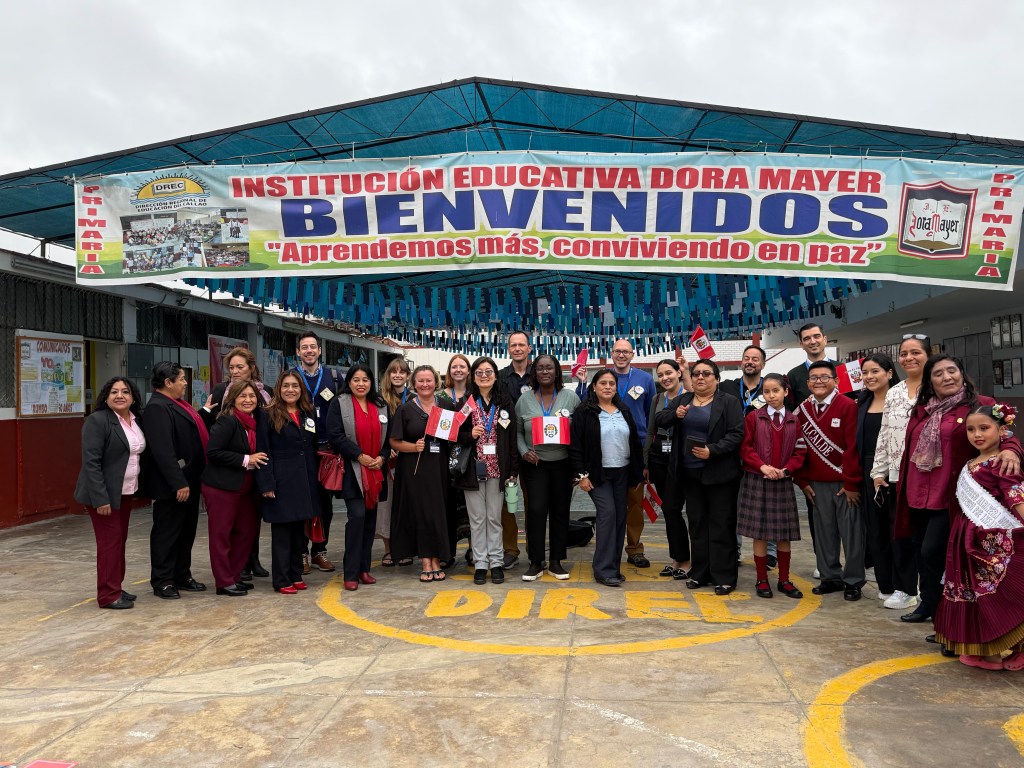
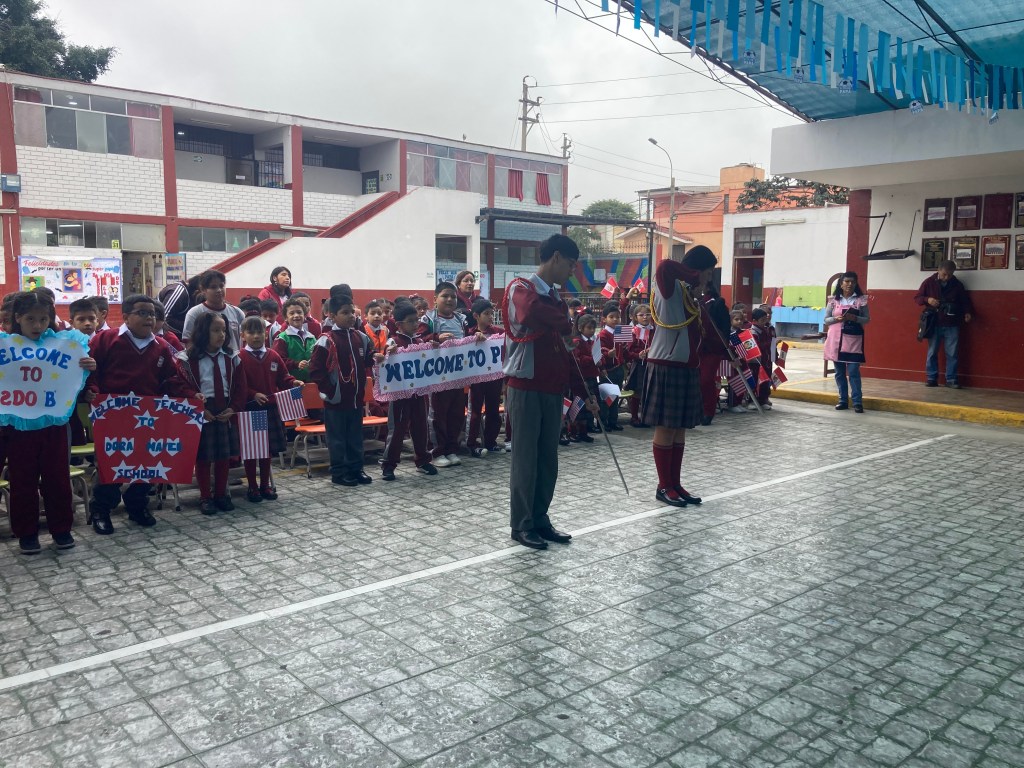
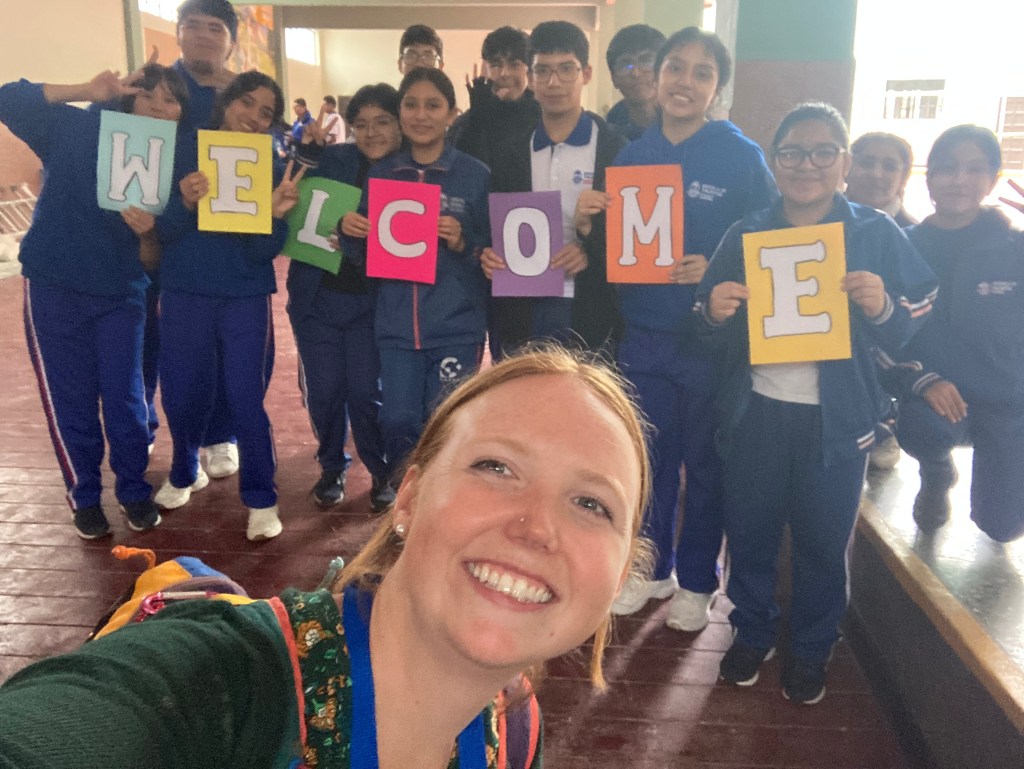
When we arrived at Dora Mayer we were automatically greeted by Mattias, a grade 4 primary student who was voted the Mayor of the school. He wore a silver sash and greeted us with a warm smile and as much English he could muster. The students around us swarmed in a sea of scarlet and I noticed all the public school teachers wore pink shirts with red pants. As we made our way past the vestibule of the school, there was a group of kids waving balloons and welcoming us in front of the gym which had 20 chairs in the center. Most of the other foreign teachers smiled and waved at the kids and kindly took their seats, not me.
Instead of sitting down without interacting with the students, I bypassed our chairs and went right up to the kiddos on the far side smiling with excitement, crouched to their level, and asked them their name. Their faces lit up and we had a conversation pieced together with broken Spanish and English. In most schools in Peru, English is not mandatory in the primary school, only secondary, and unless students go to a private school they have very limited interactions with English. So today, was a special day.
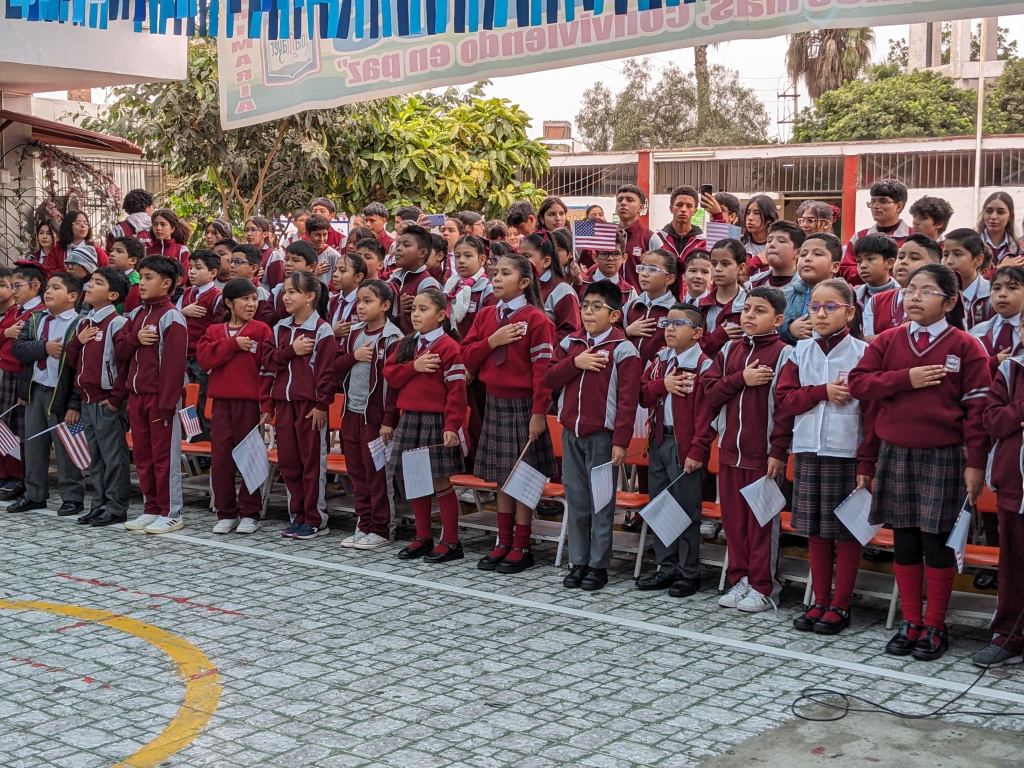
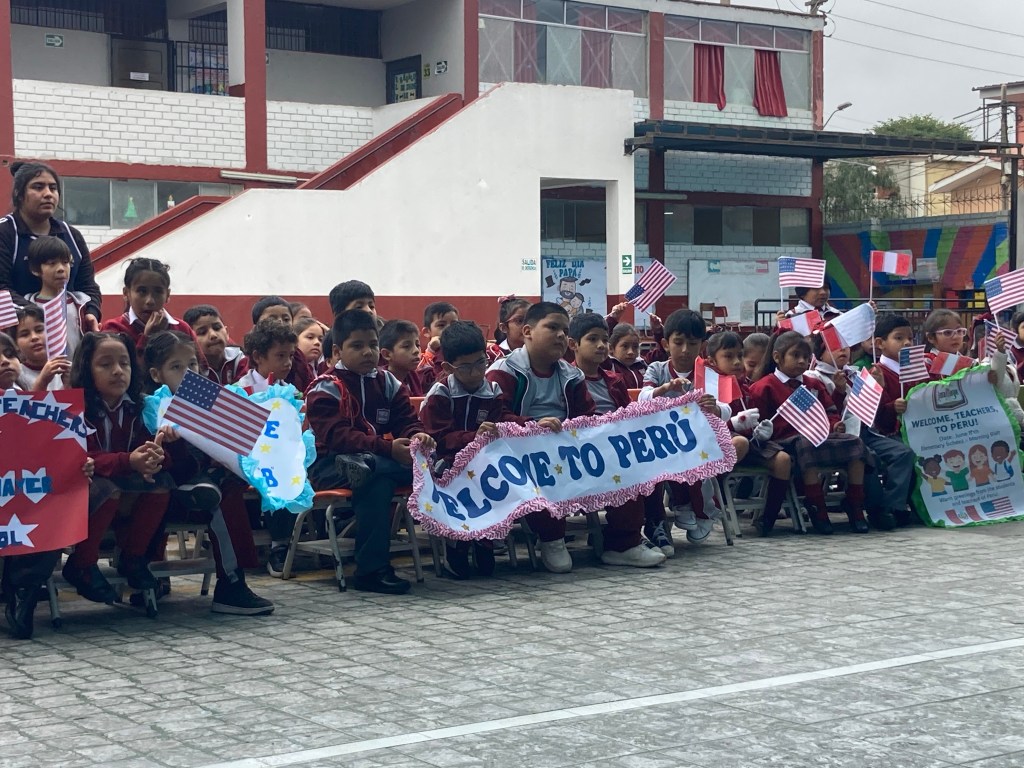
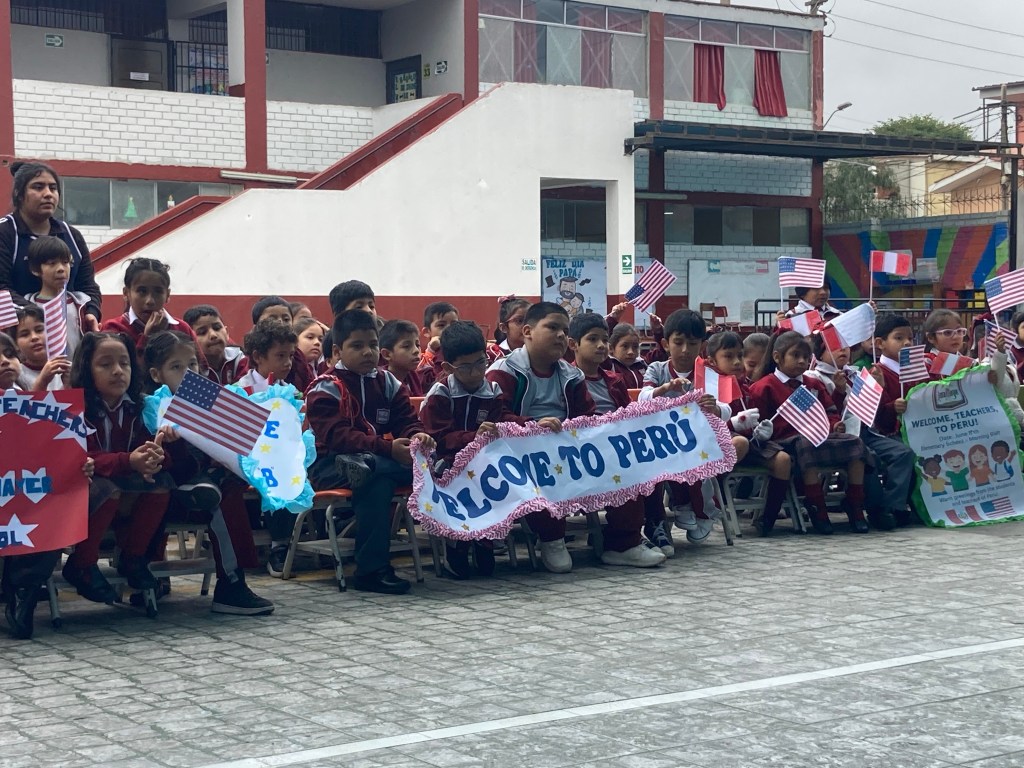
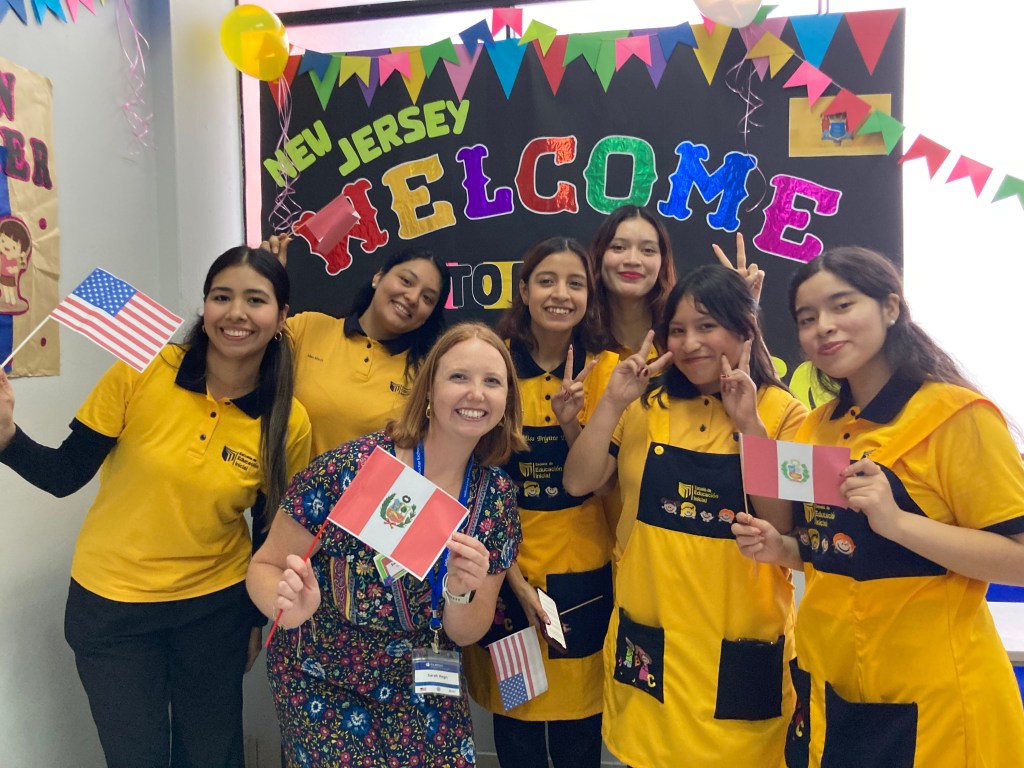
After a few minutes of that automatic dopamine boost talking with students, I sat down with the rest of my crew. Students in scarlet sat on our right and left, leaving room in the middle for a performance or show. As we waited for the principal to start speaking, children sat on both sides holding their “Welcome to Peru” signs and waved American and Peruvian flags. The kids were so happy to see and meet us, as were we.
After the principal’s warm introduction, the students started their performances. First, there was a dance performance by a group of secondary students. It looked like they incorporated various dances both traditional to Peru and other countries. After that, a group of students brought out wooden boxes and started playing them as a secondary student danced to the beat. The music was amazing and so upbeat and lively. It was awesome.
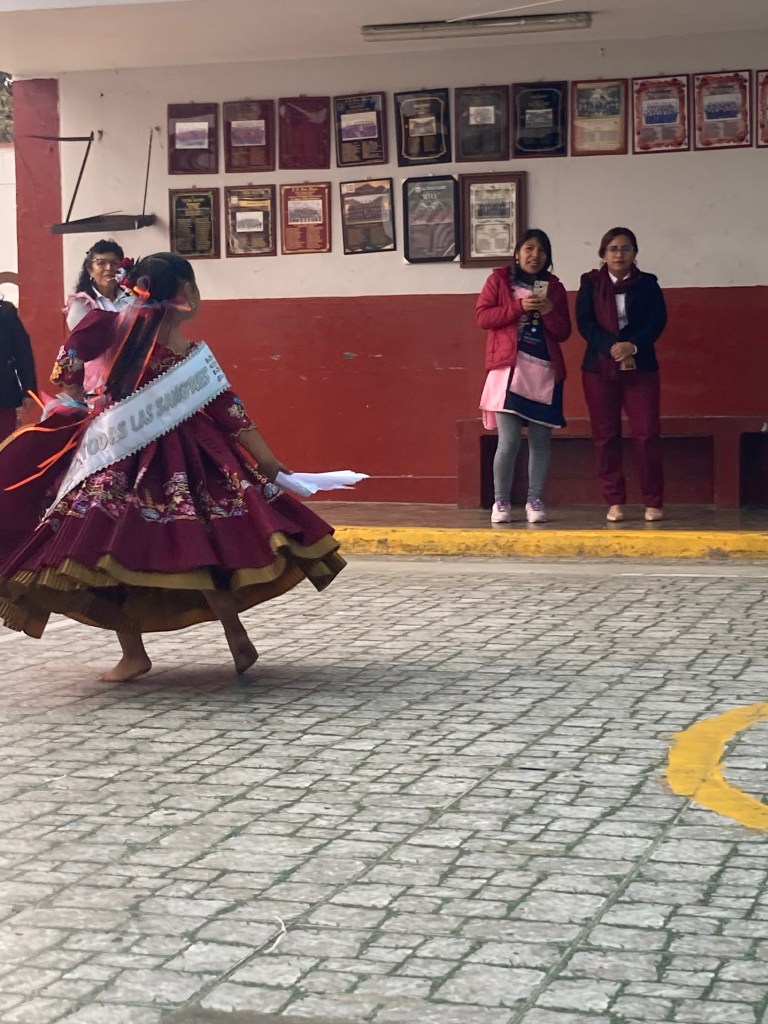
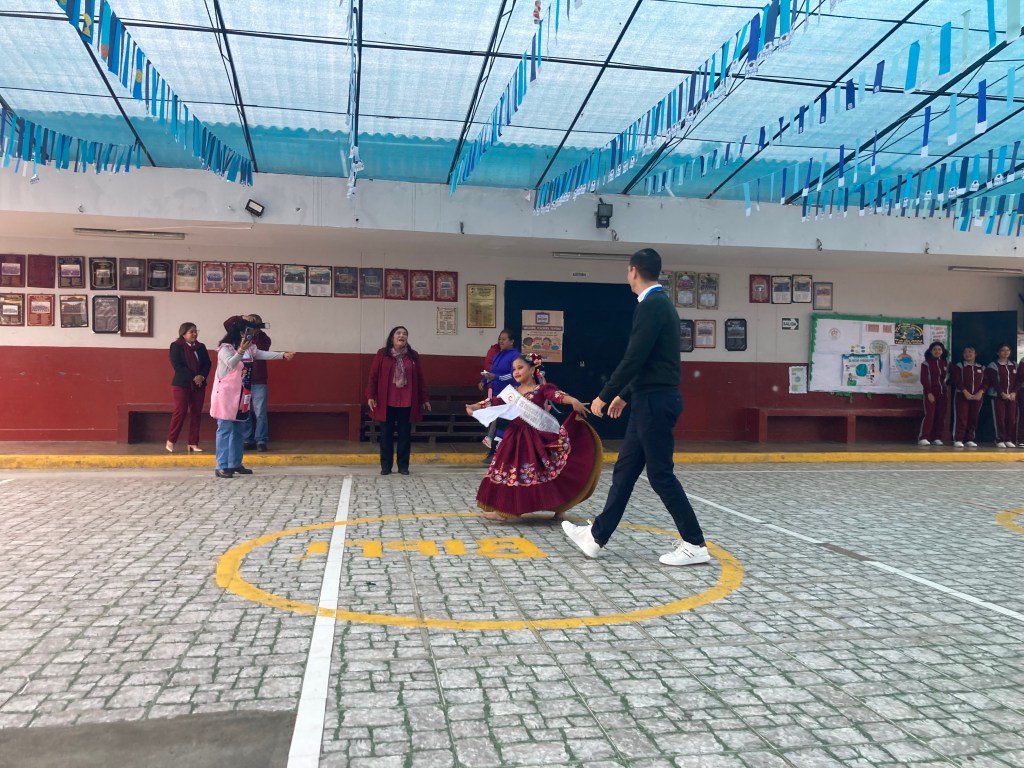
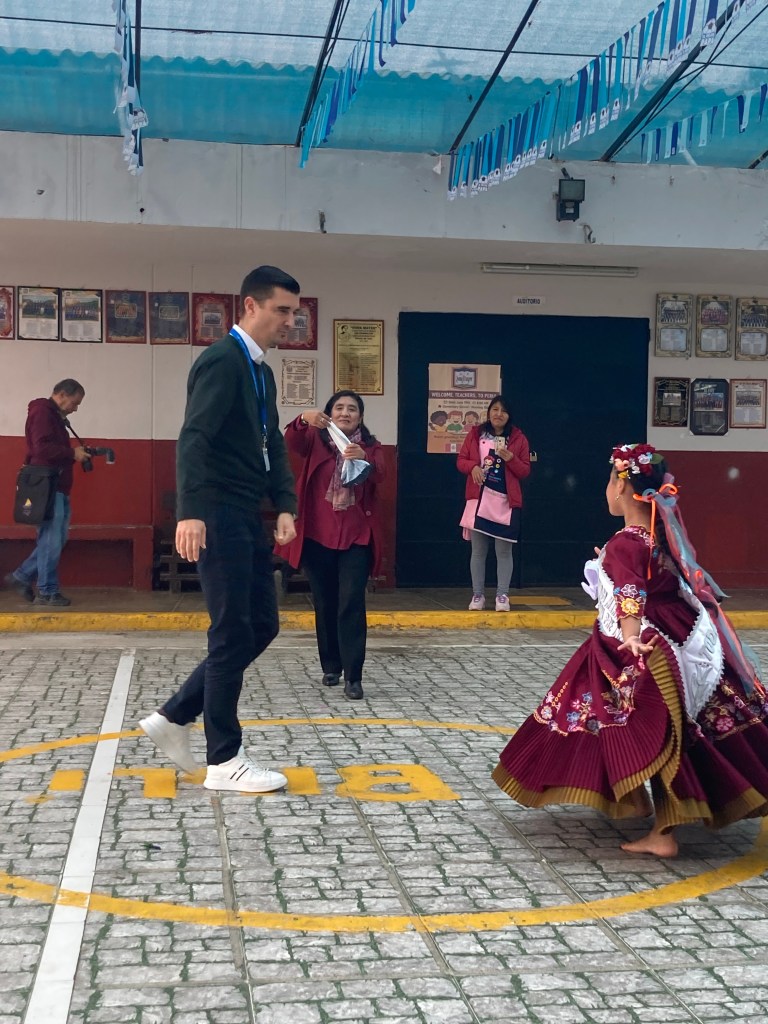
Following their lead, a traditional Peruvian competition dance winner in primary school came up in an elegant Peruvian dress and danced for over 5 minutes showing off her quick footwork across the dance floor. She was remarkable. Her teacher then pulled Johnathan, the Senior Director of Fulbright, to the center to join her. They gave him a handkerchief and as best as he could tried to follow along. Go Johnathan!
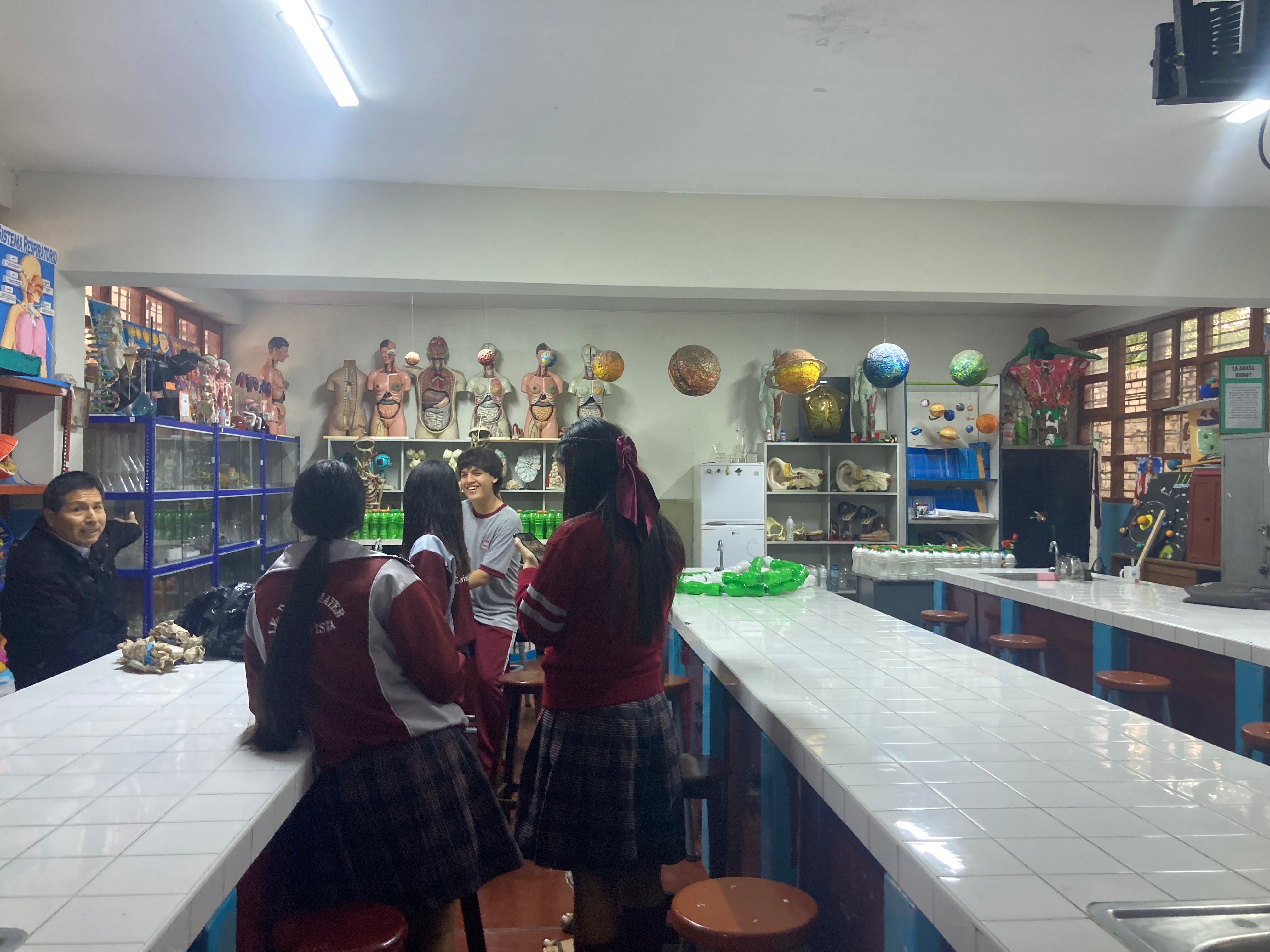
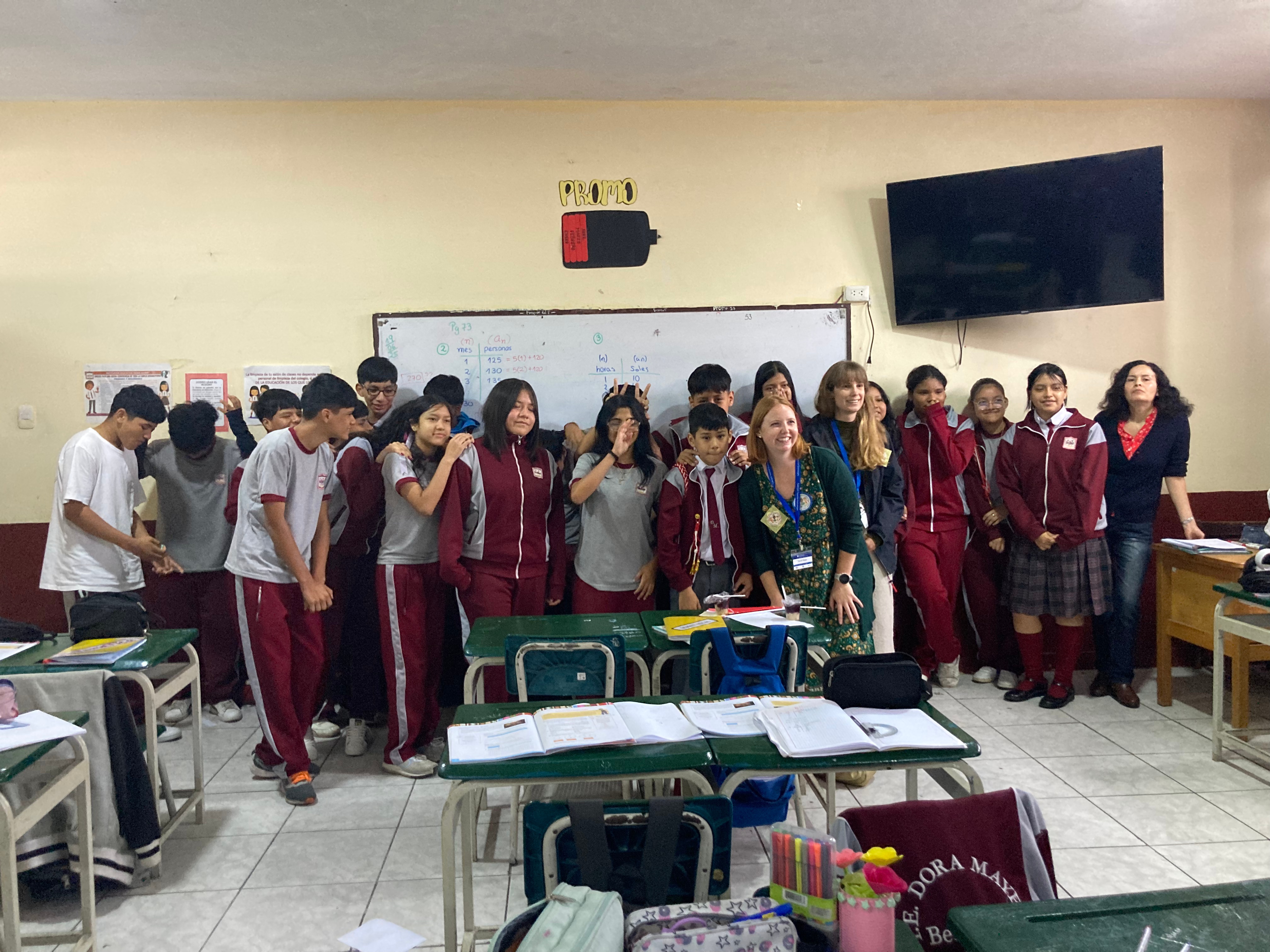
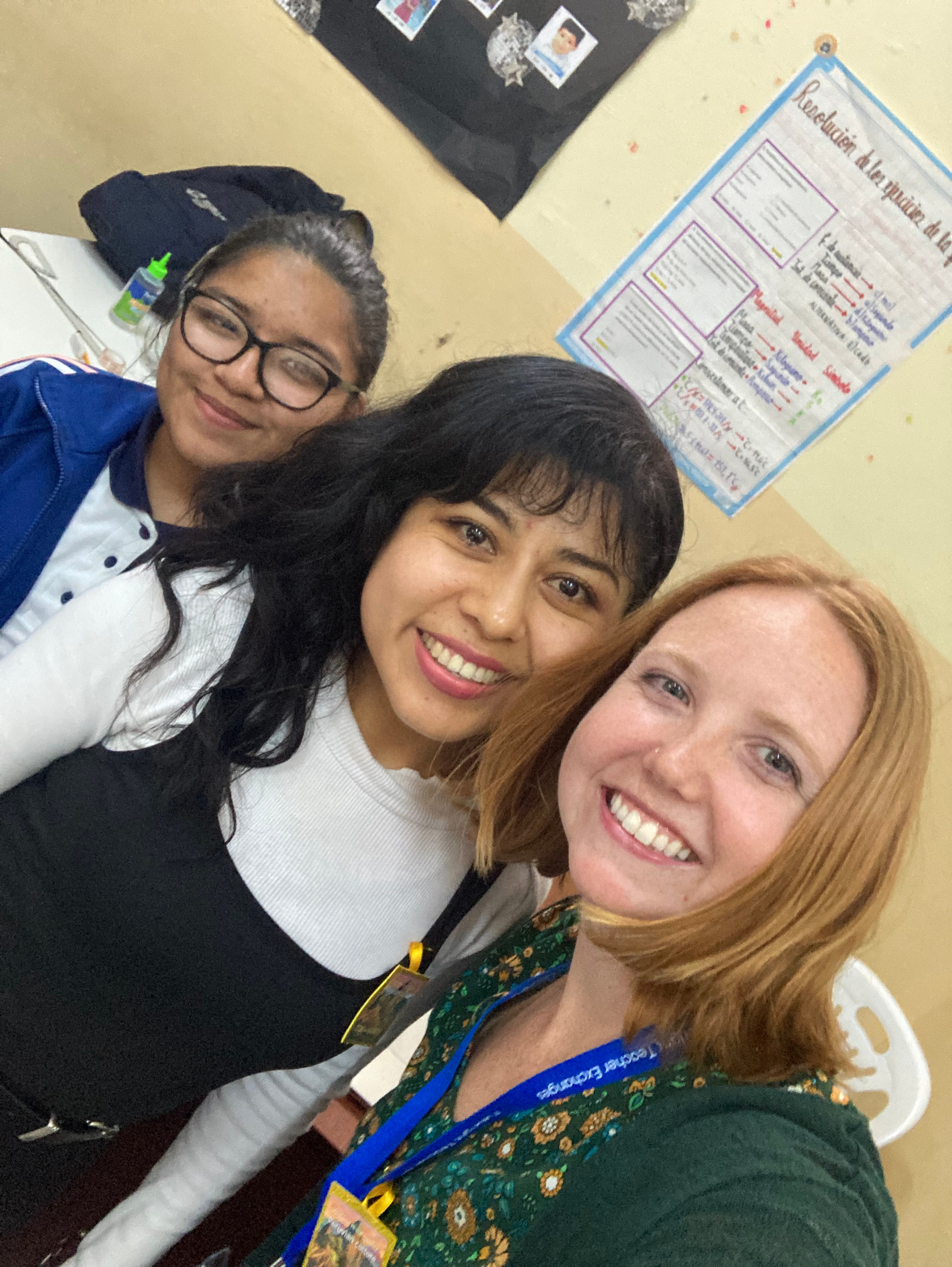
After all of the dance performances, it was time to get to the classes! Dora Mayer has 1,000 students total for both primary and secondary and my oh my did it feel like there were 1,000 students. I felt like everywhere I turned there was a new face in front of, next to, behind, or beside me. I was paired with Jacey, she’s awesome! We taught in four different classrooms and saw the Science room, garden, Music room, and Computer room. I noticed in all of the classes, the teachers had their students stand when we entered, told the students to breathe and pay attention, and then the teacher turned to us waiting for us as the students stood. I caught on that the class was now in our control and quickly began our activity.
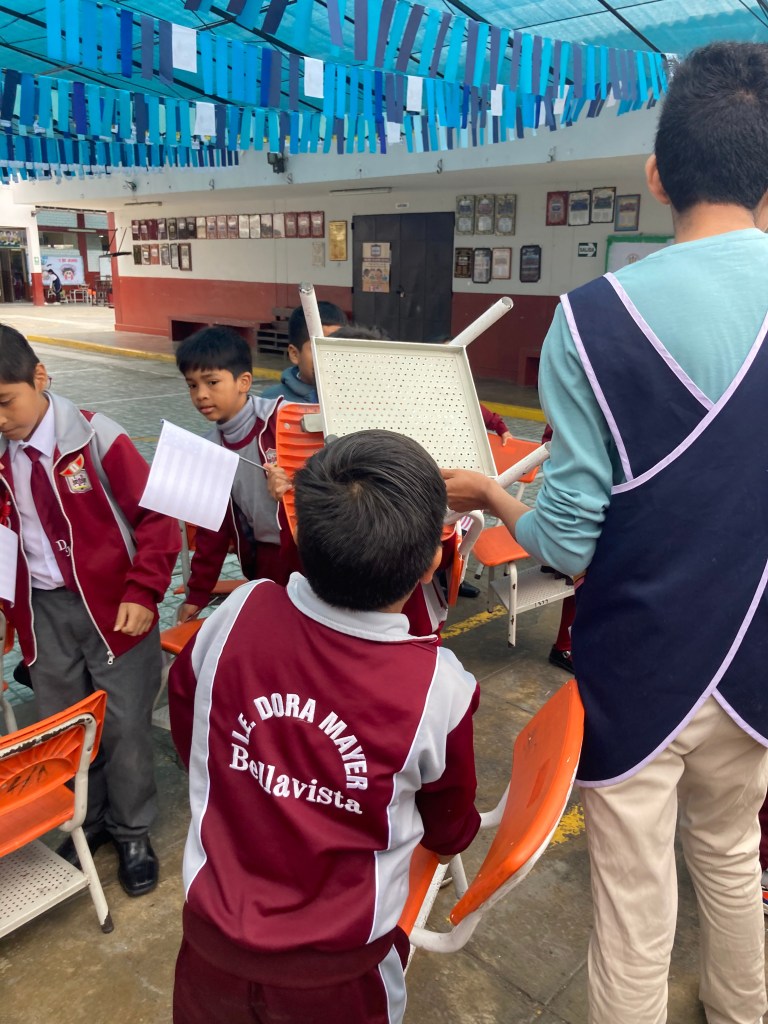
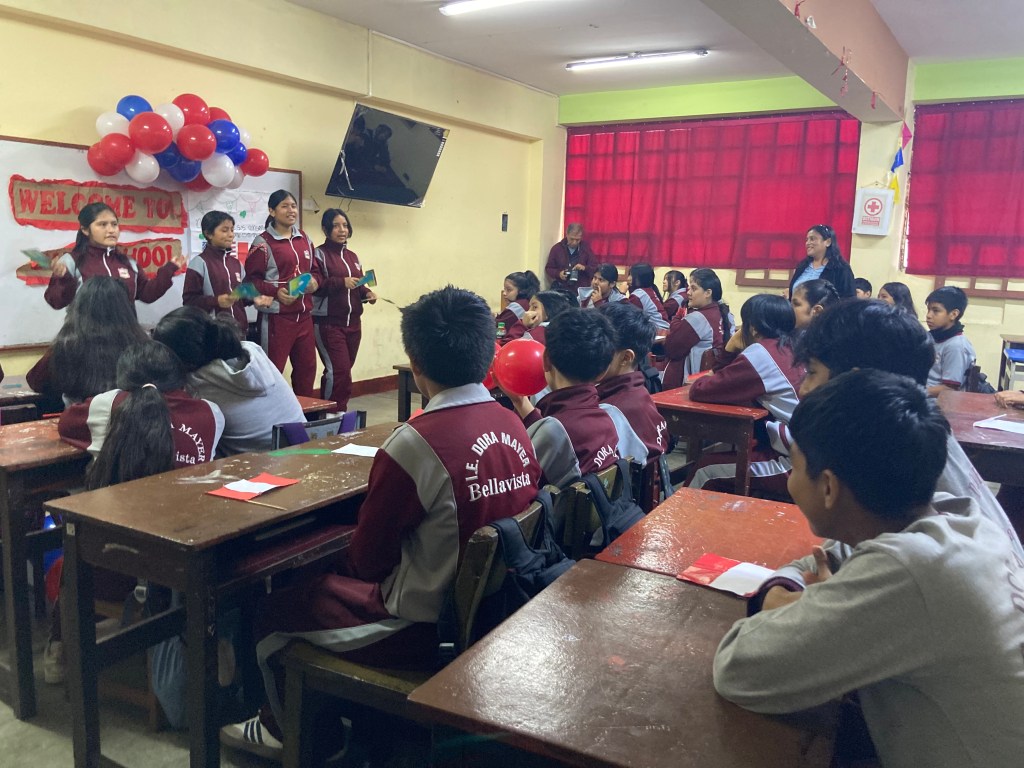
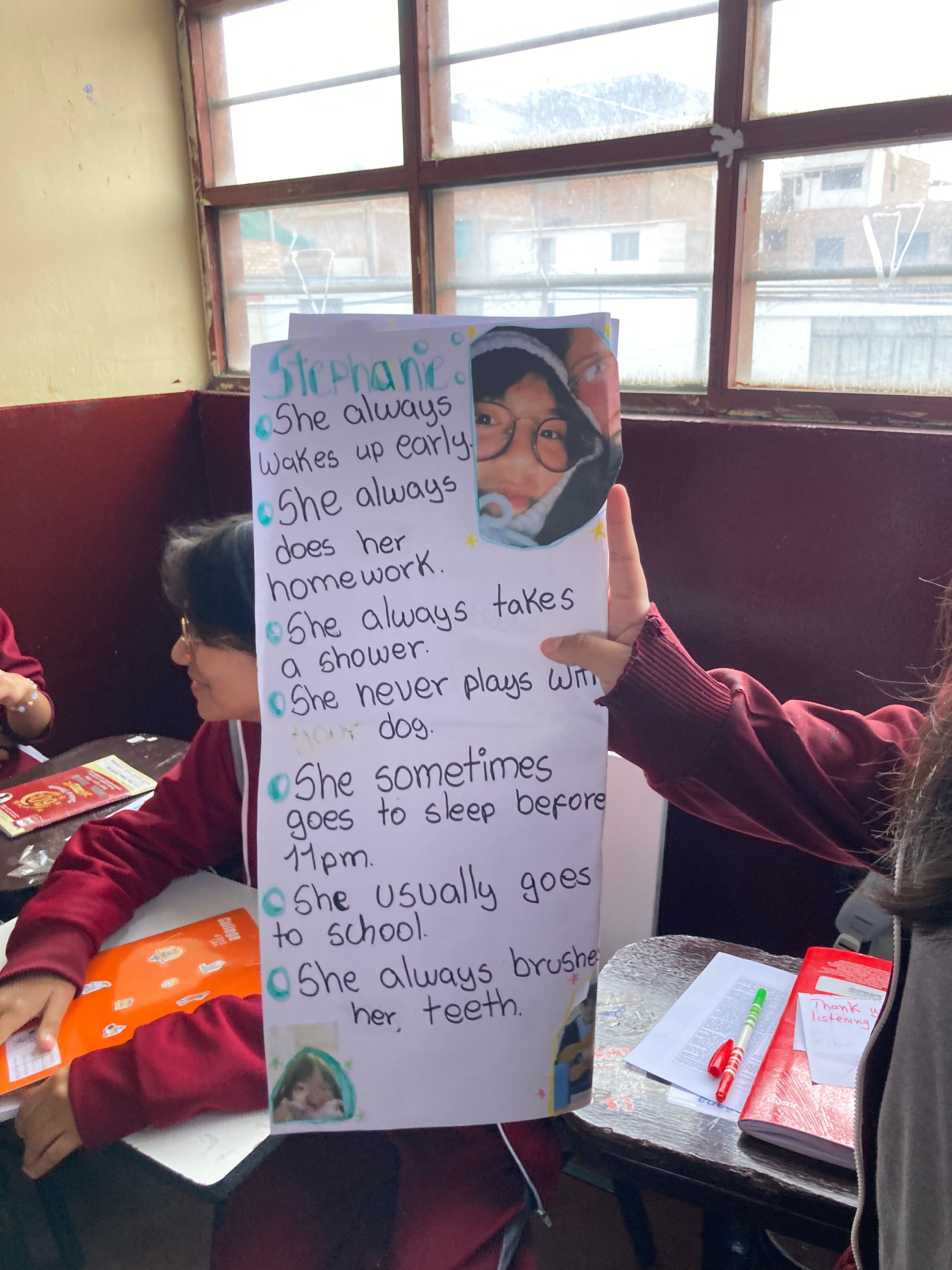
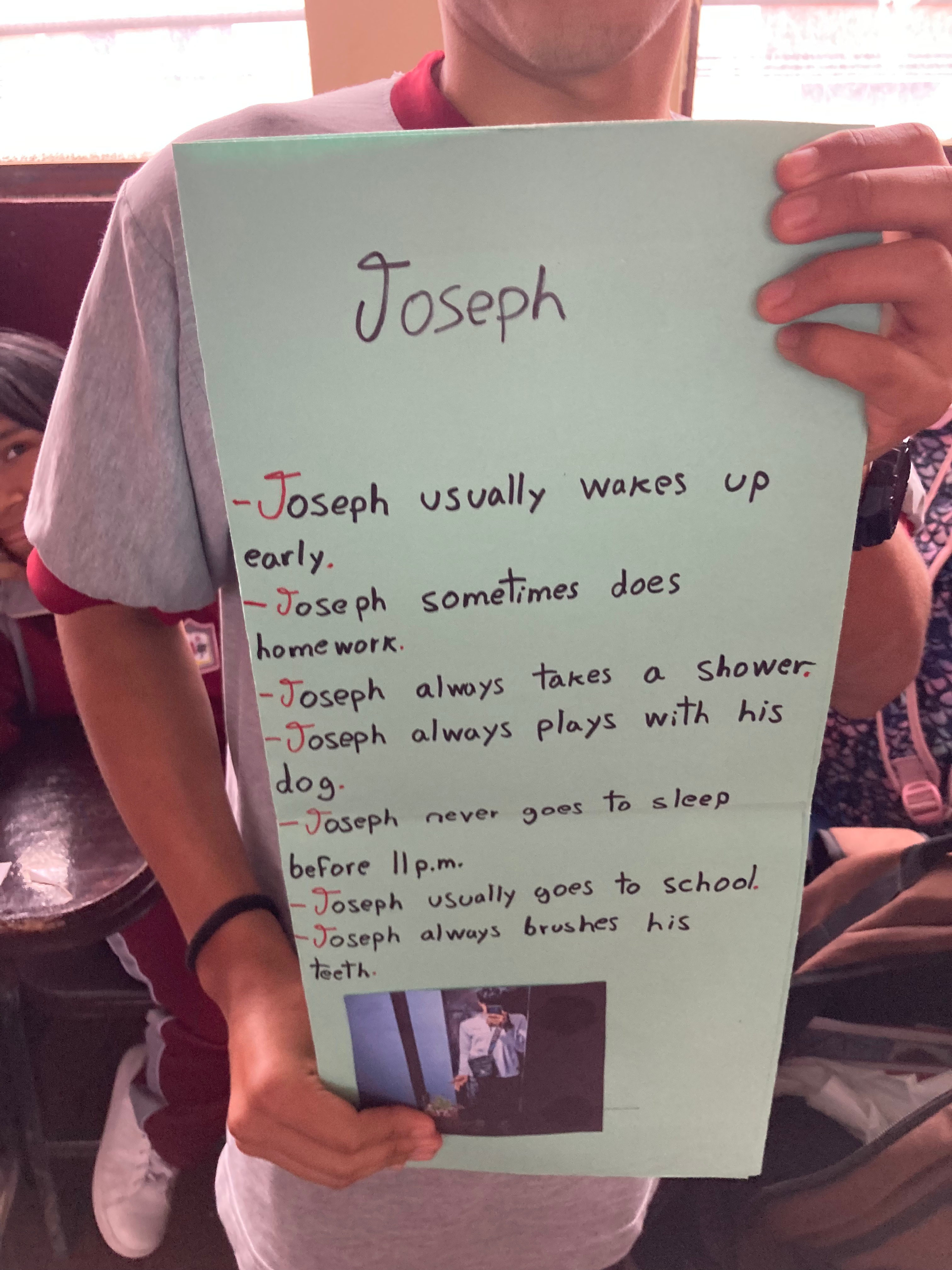
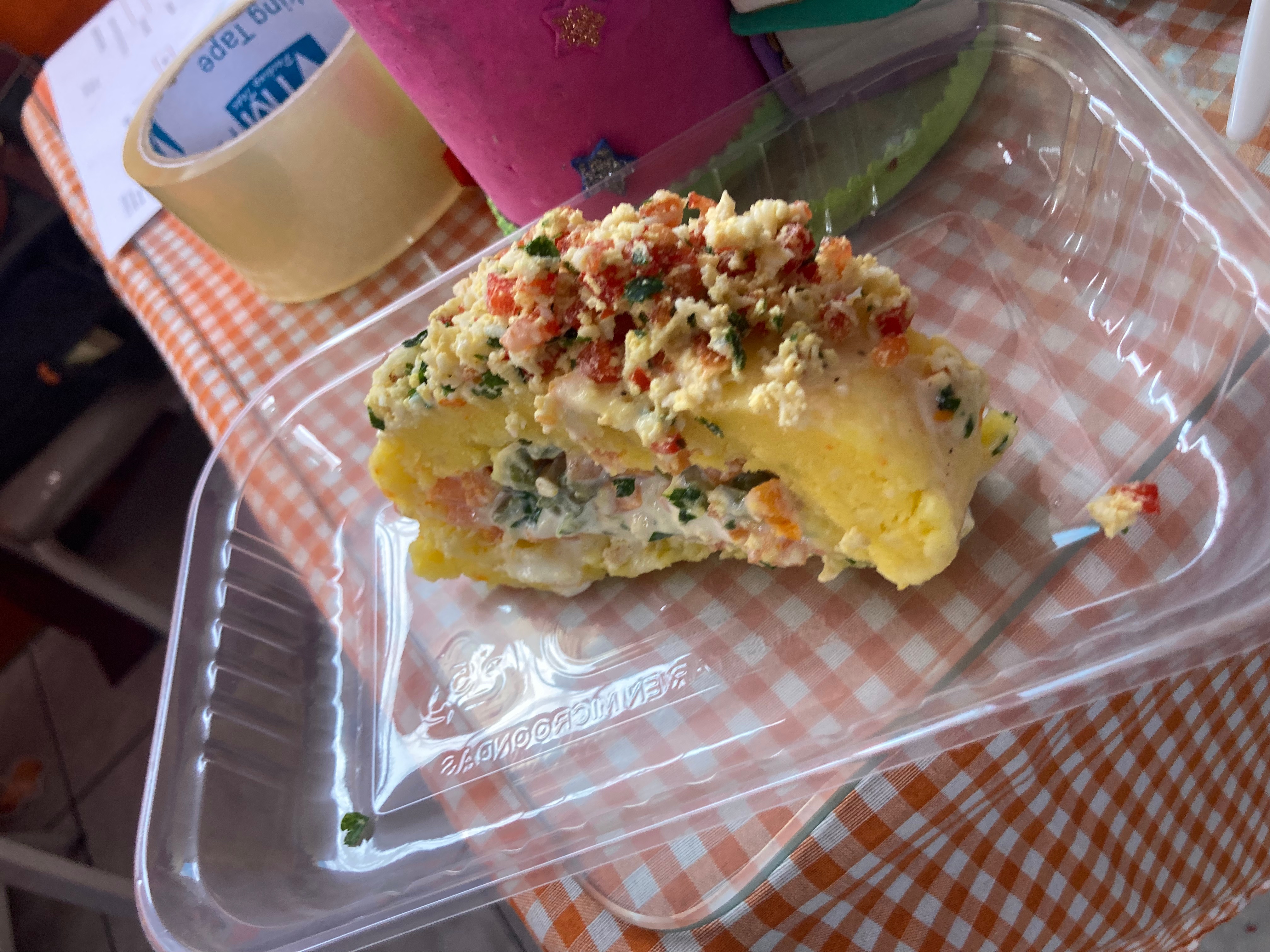
In the first secondary class, we moved the chairs to the side and played a whole class “Me Too” movement game; then opened the floor for questions. In the second secondary class, the students were taking a test so we did a “Do you Like?” game where students had to move to one side of the room or other to answer either a Yes or No question. Following that, we talked about our geography and reviewed North, South, East, and West vocabulary with the kids and did a whole group movement game. Then, we made our way to primary school where the students shared a presentation they practiced in English and we shared food in community. I gave out pencils from the Cape May City Police Department to the students and everywhere I turned I was embraced or asked what my name was.
Even though we were split up, I was told that we would all have the same model of instruction time with the students. Therefore, when I saw another Fulbrighter I asked her with a bright smile how her presentations or lessons were going. She looked me right in the eyes and said “What are you talking about? There is no technology and the kids don’t speak English? What am I supposed to do? I can’t teach!” And I just stared at her baffled. What do you mean, what do you mean you can’t teach unless you are in a very privileged setting?! A good teacher doesn’t need any technology, resources, or curriculums. A good teacher can command a room; entertain, excite, and engage students with any lesson regardless of a language barrier. A good teacher can make anything work….and then it dawned on me, maybe not every teacher can make anything work.
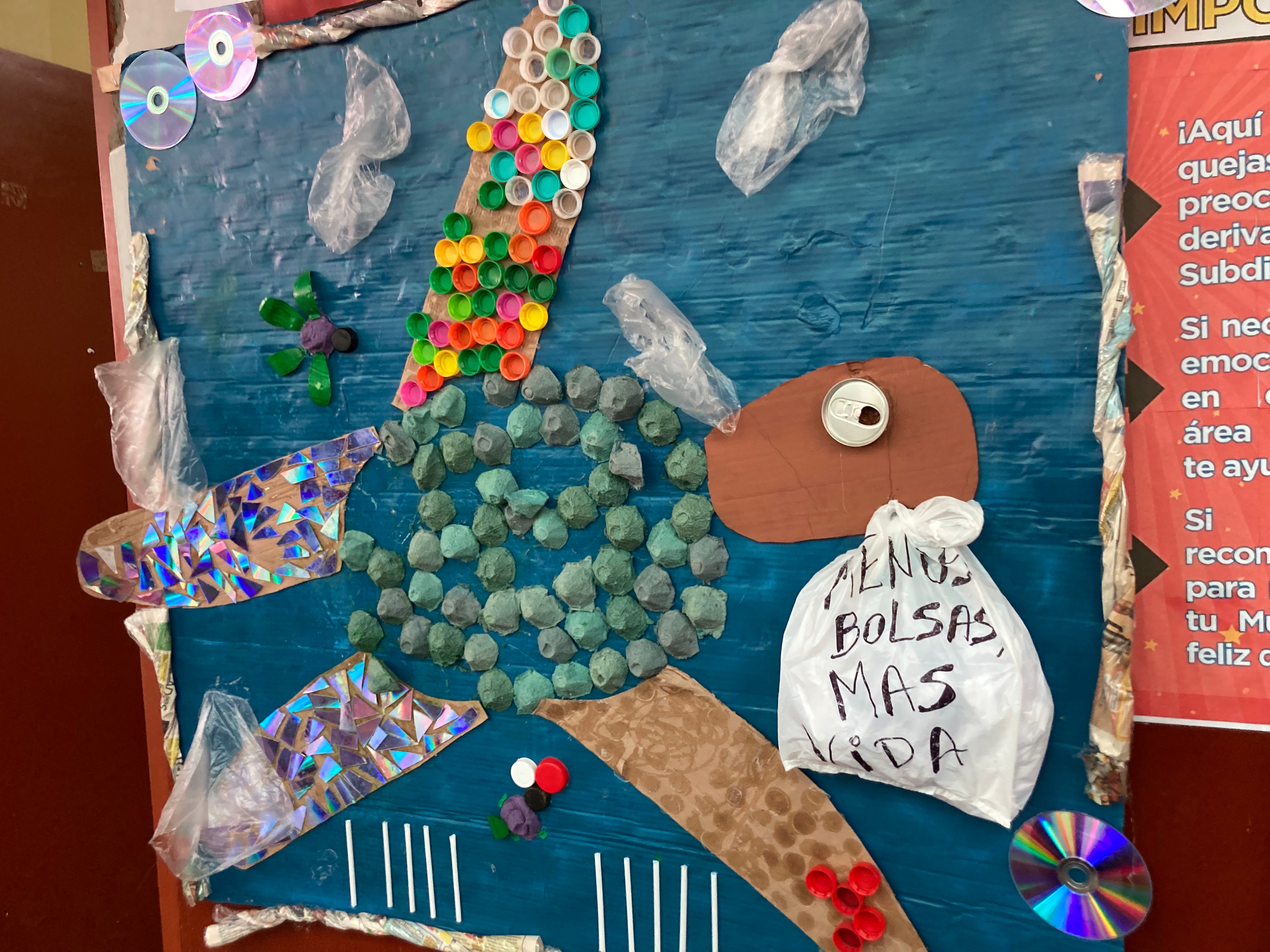
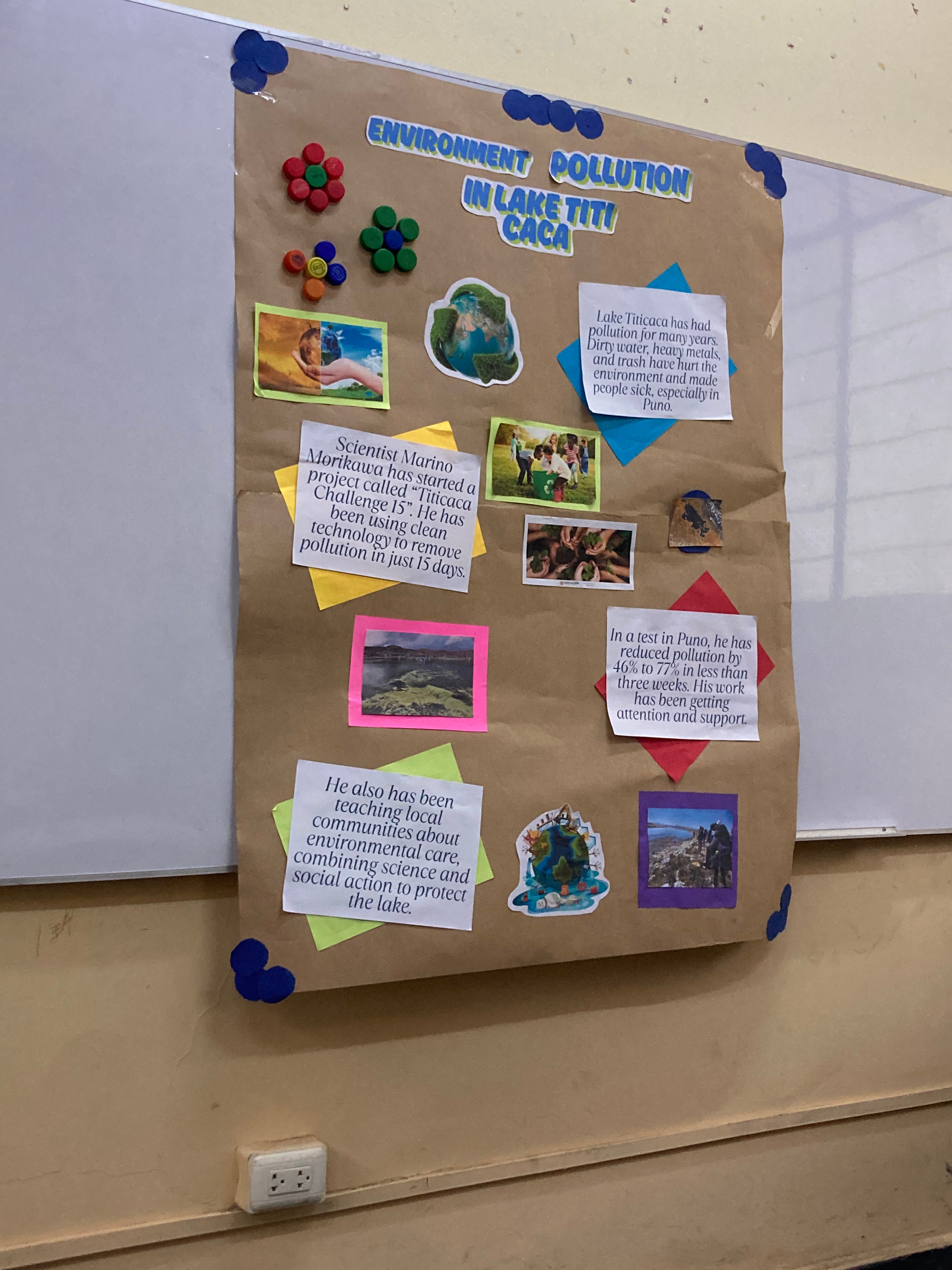
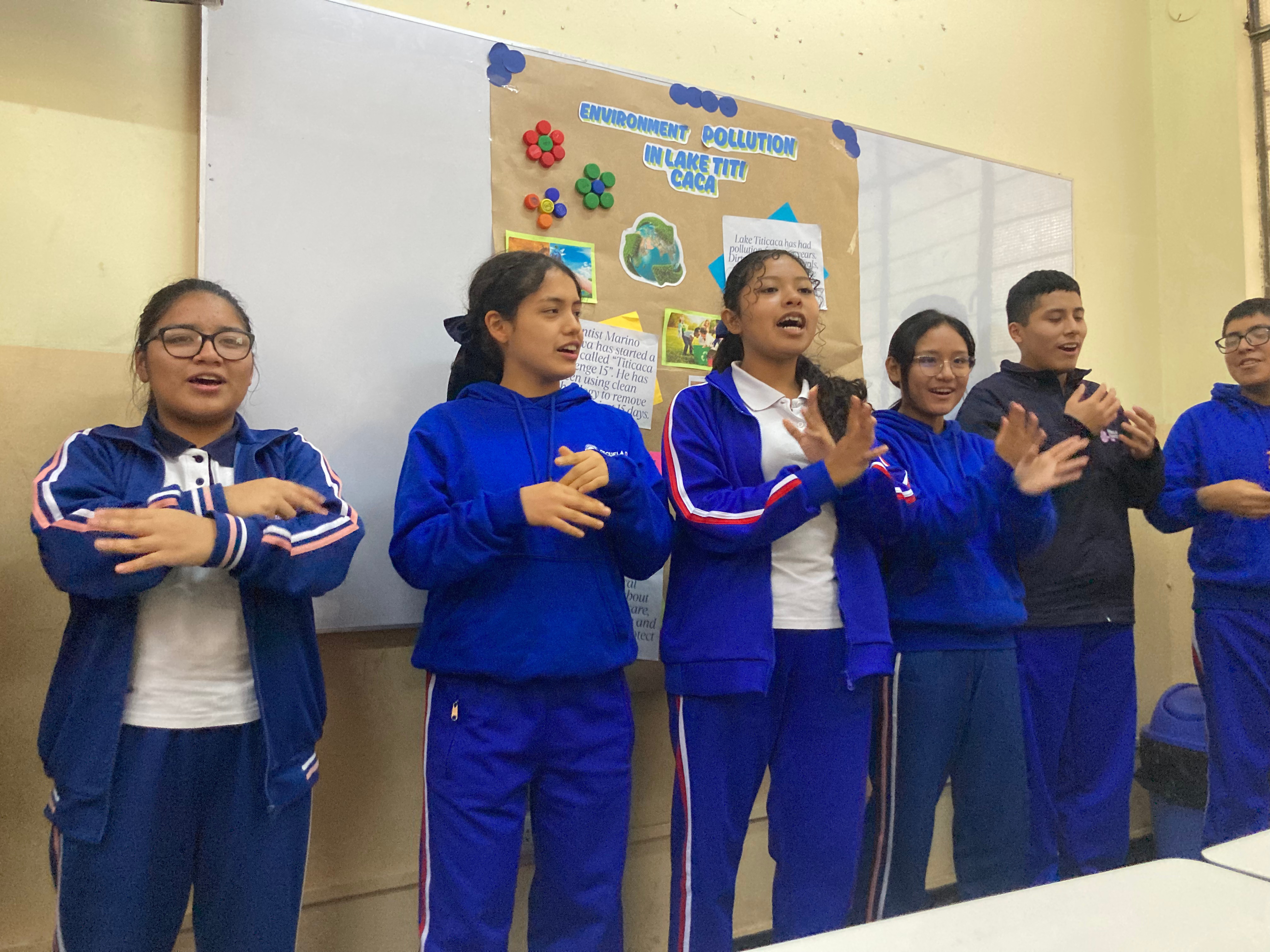
Projects students created throughout the school made with reusable and recyclable goods!
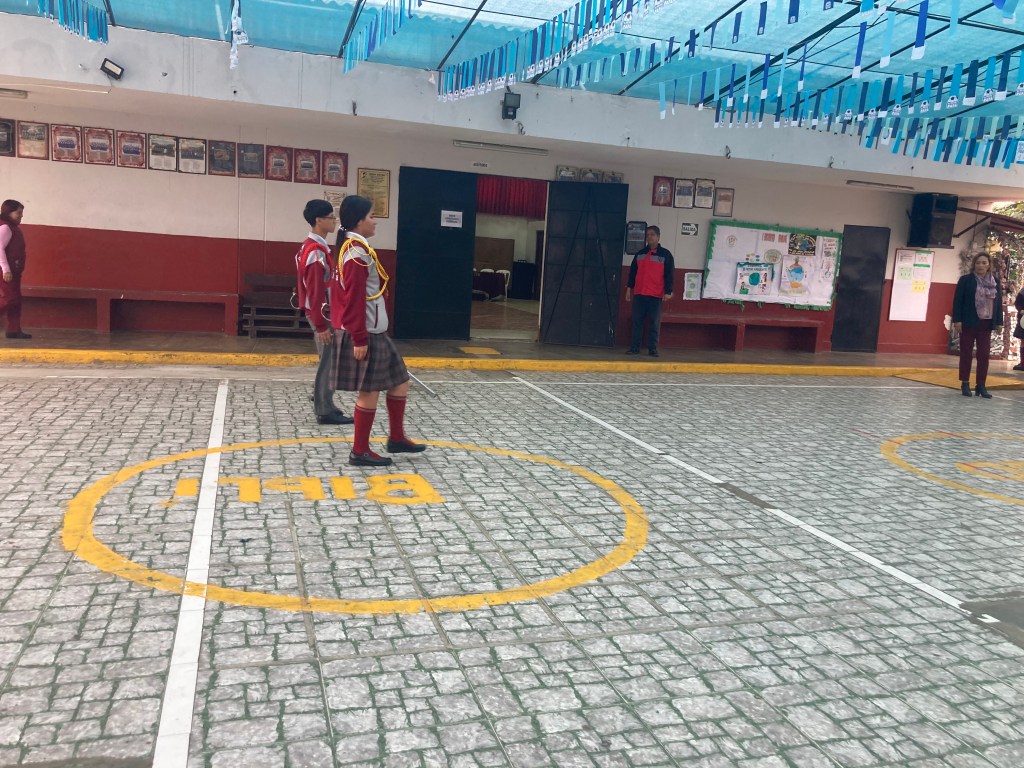
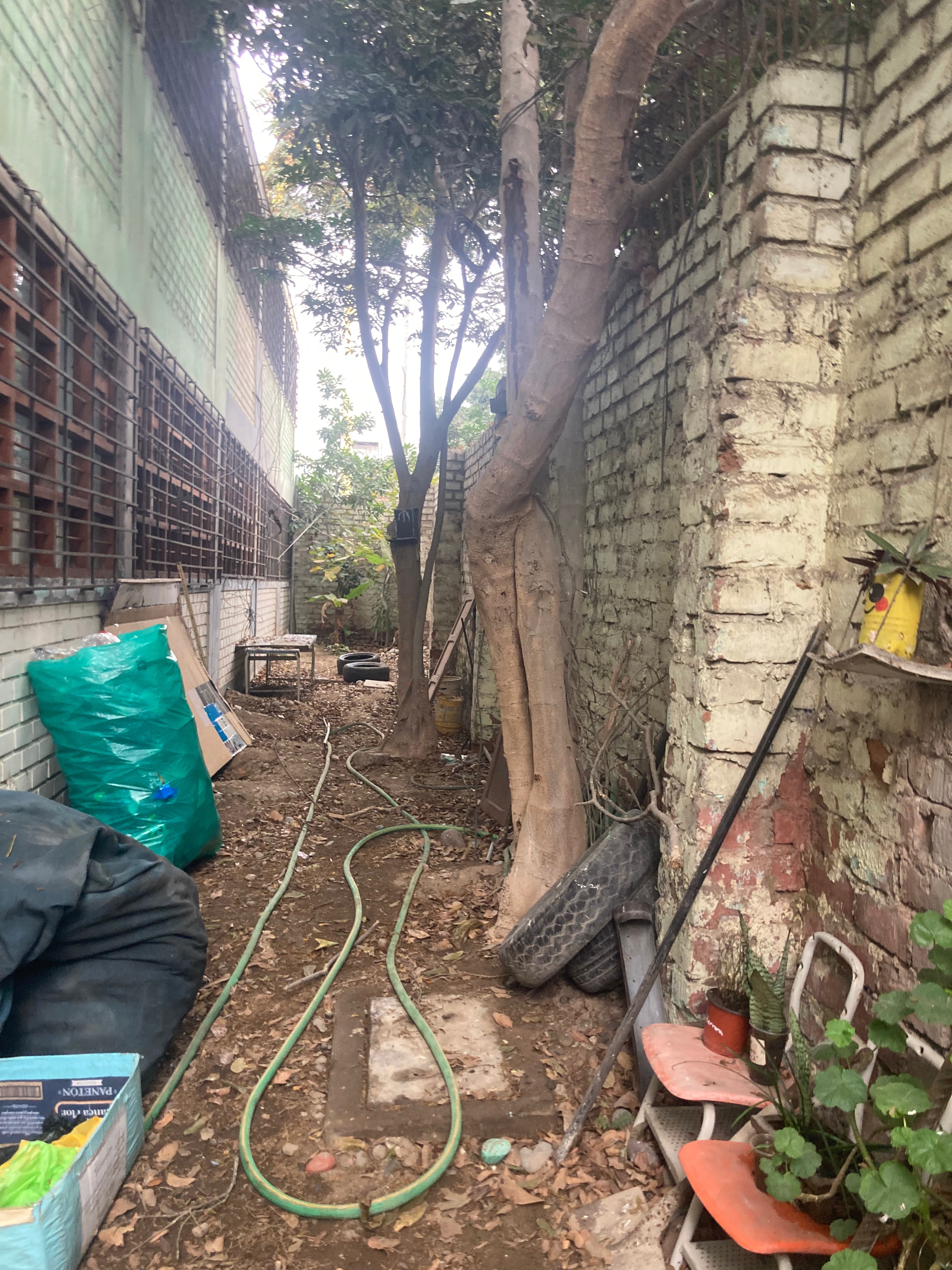
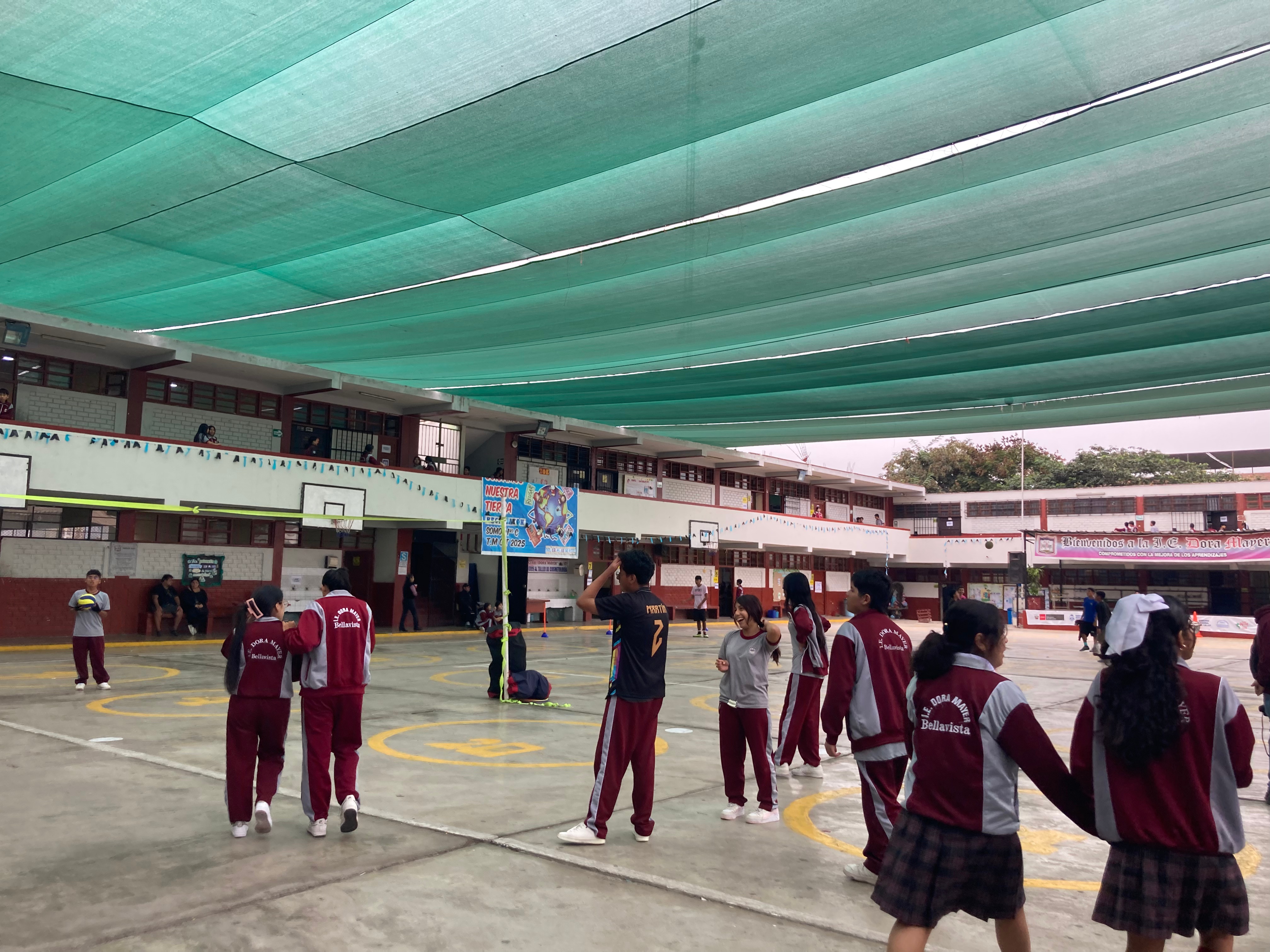
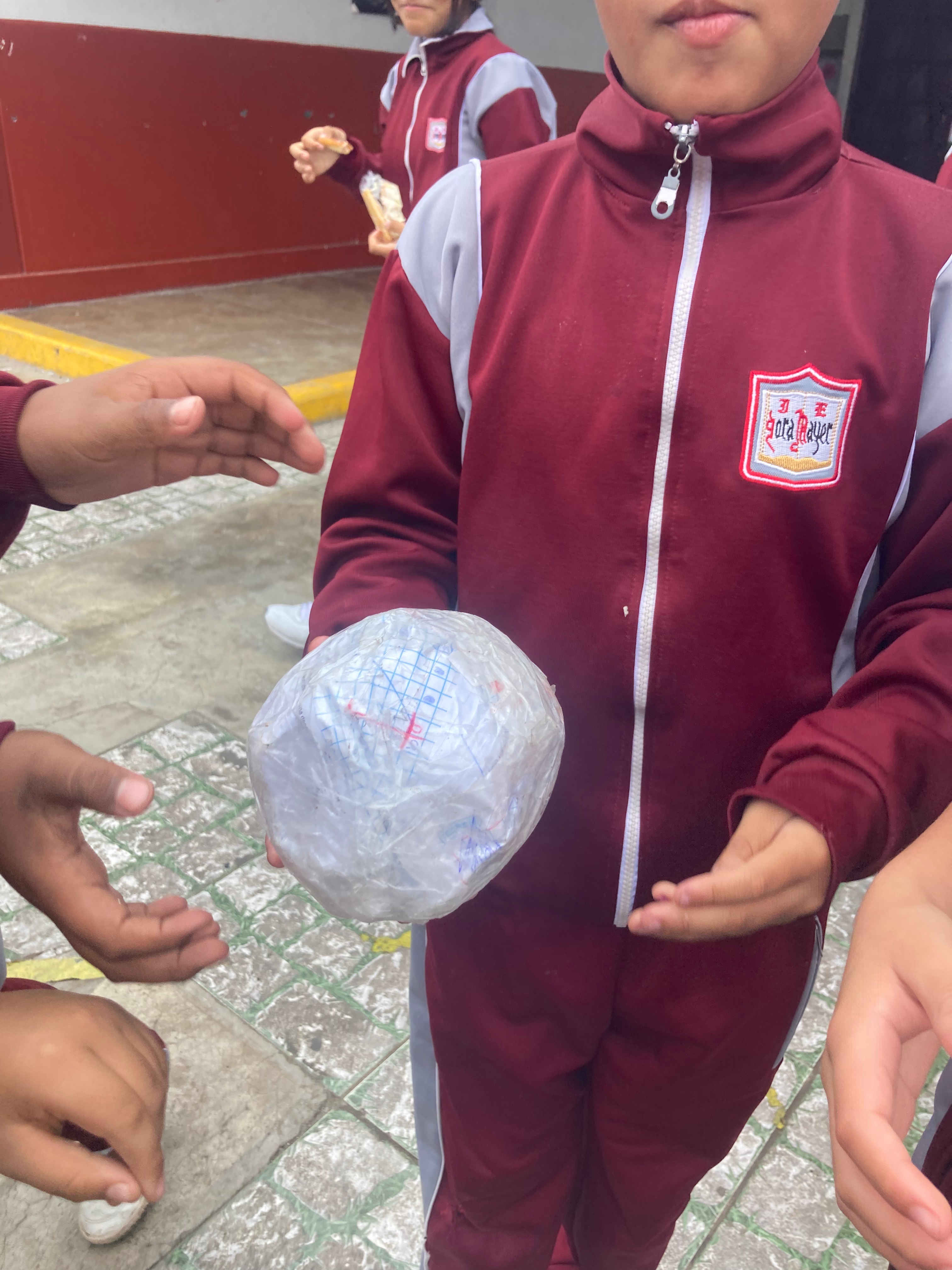
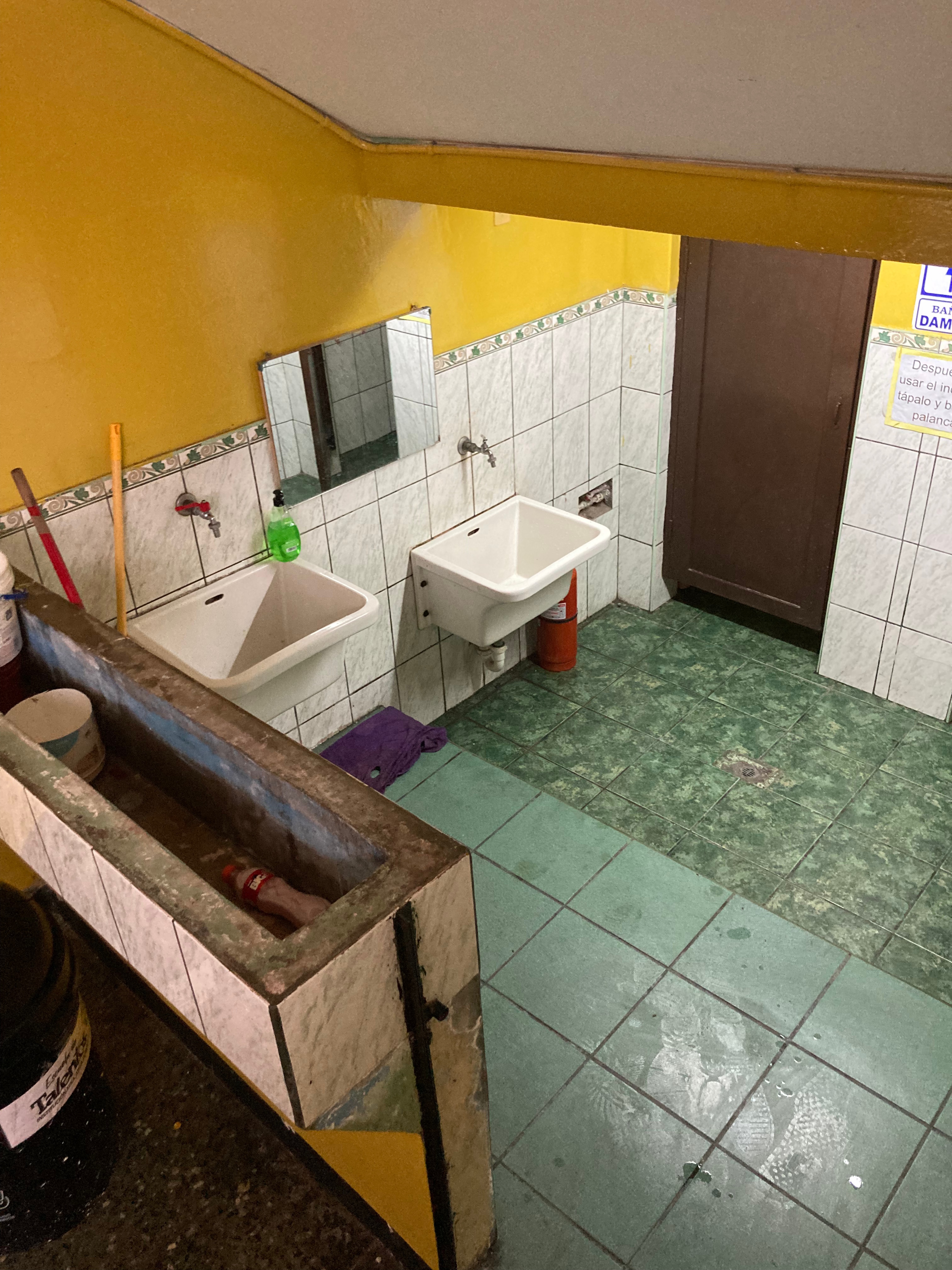
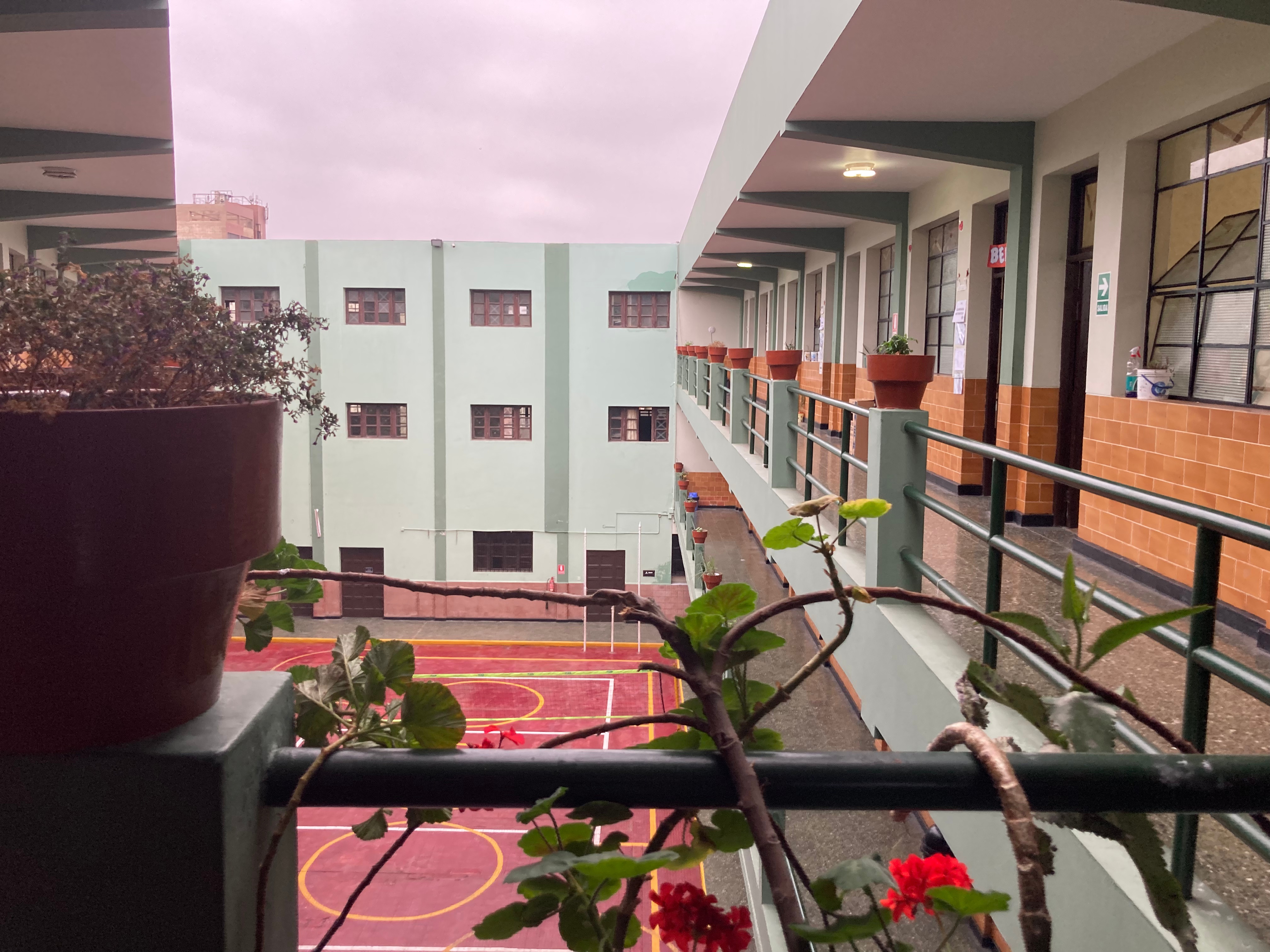
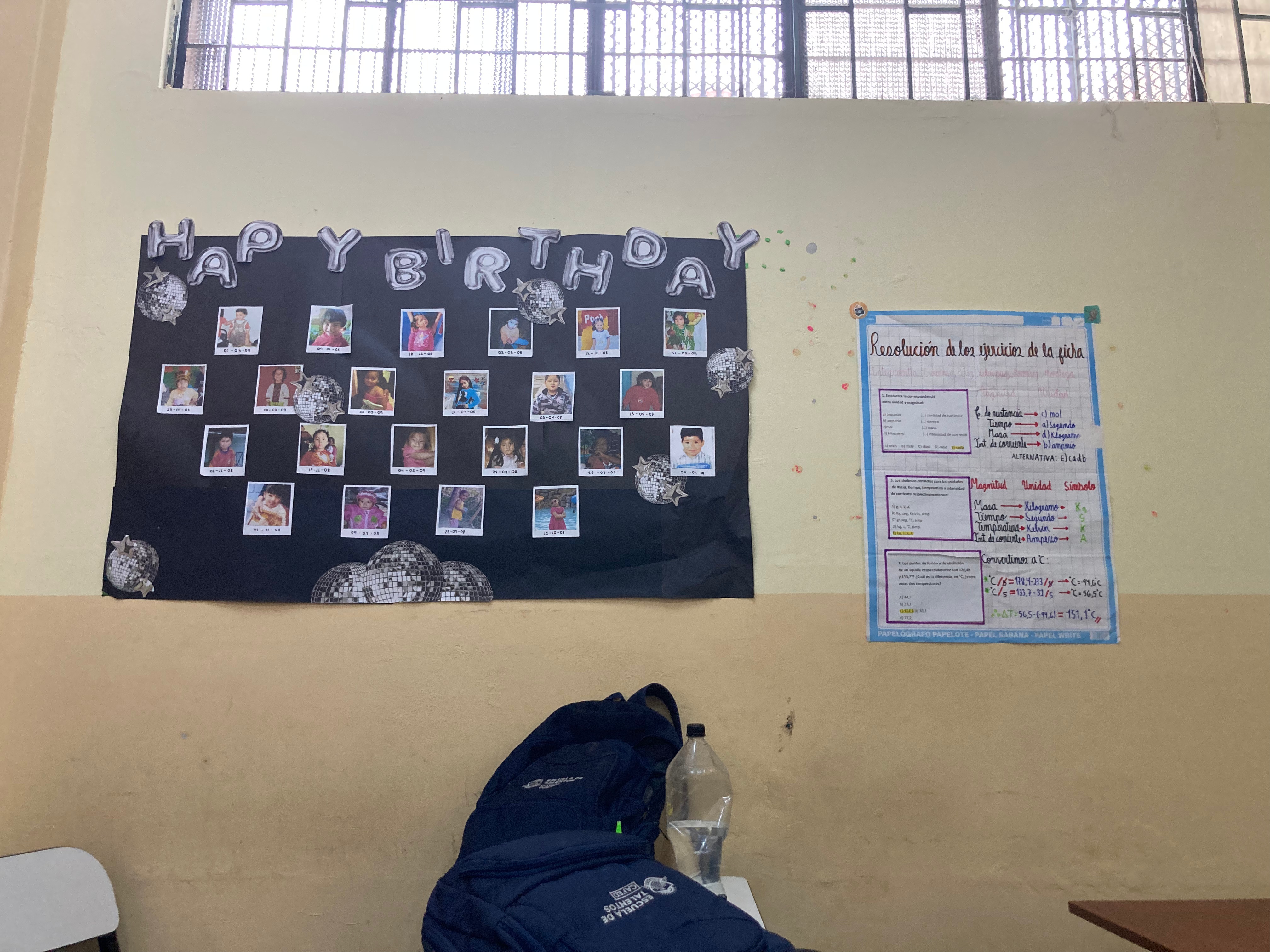
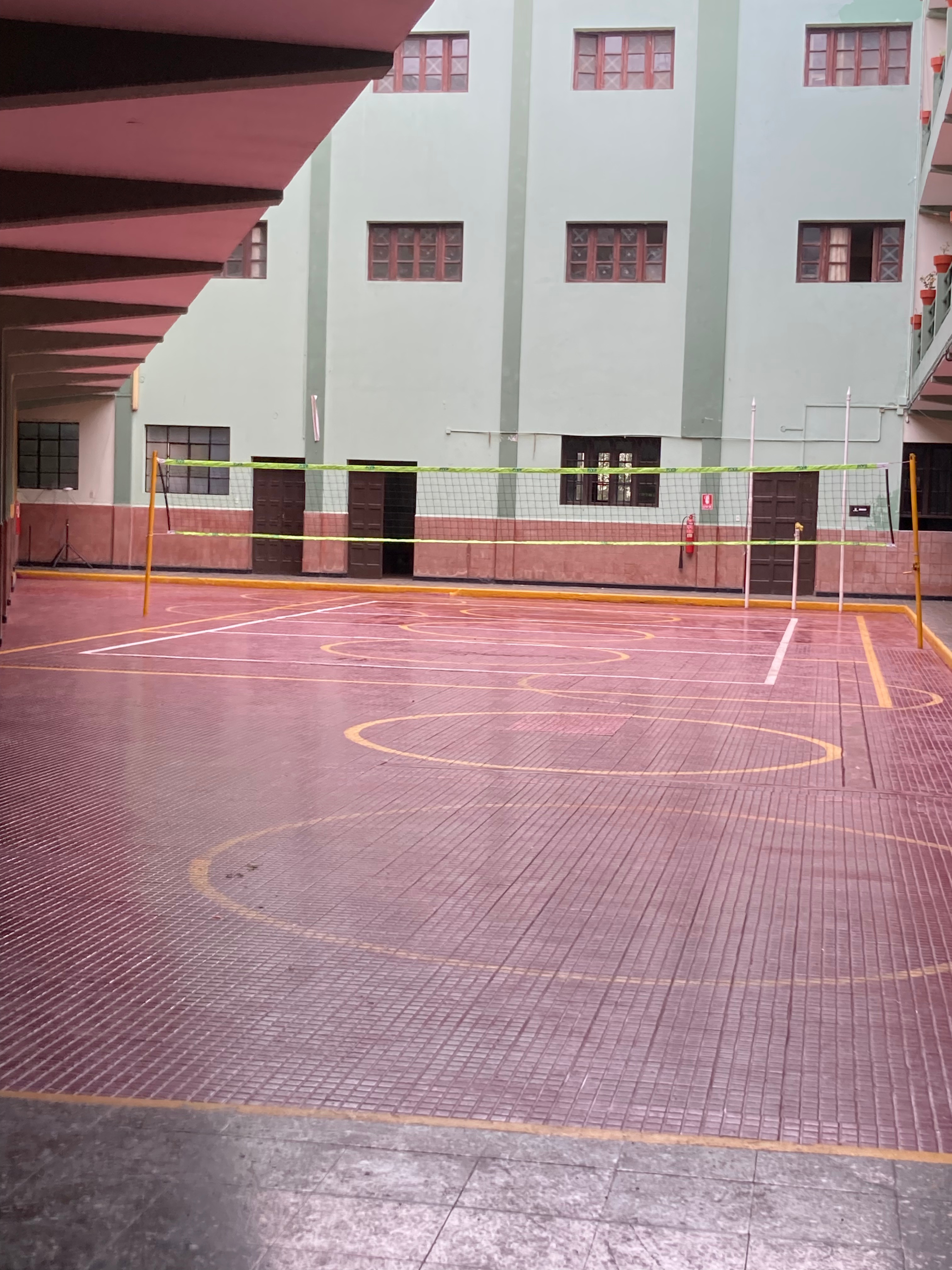
In between classes, I watched kids run around the courtyard with a small little white ball. As I watched I realized they were playing soccer, but the ball was really small. As I saw the game more, I noticed they had two goals for the field. On one side it was two trashcans about two feet apart and on the other side it was a broom and trash can two feet apart. When I approached the soccer players I noticed the ball was pieces of paper with clear tape wrapped around it. The volleyball net was merely a string, no net. The metal soccer goal just had the base of the structure, no net. The desks were vacant and most of the walls fairly bare. When I saw student projects on the wall they were all made of recyclable and reusable materials including old bottle caps, paper, and Styrofoam. Perspective and admiration were the two things I took most from my time at Dora Mayer, as well as the recognition that Dora Mayer is filled with some truly amazing and phenomenal teachers!
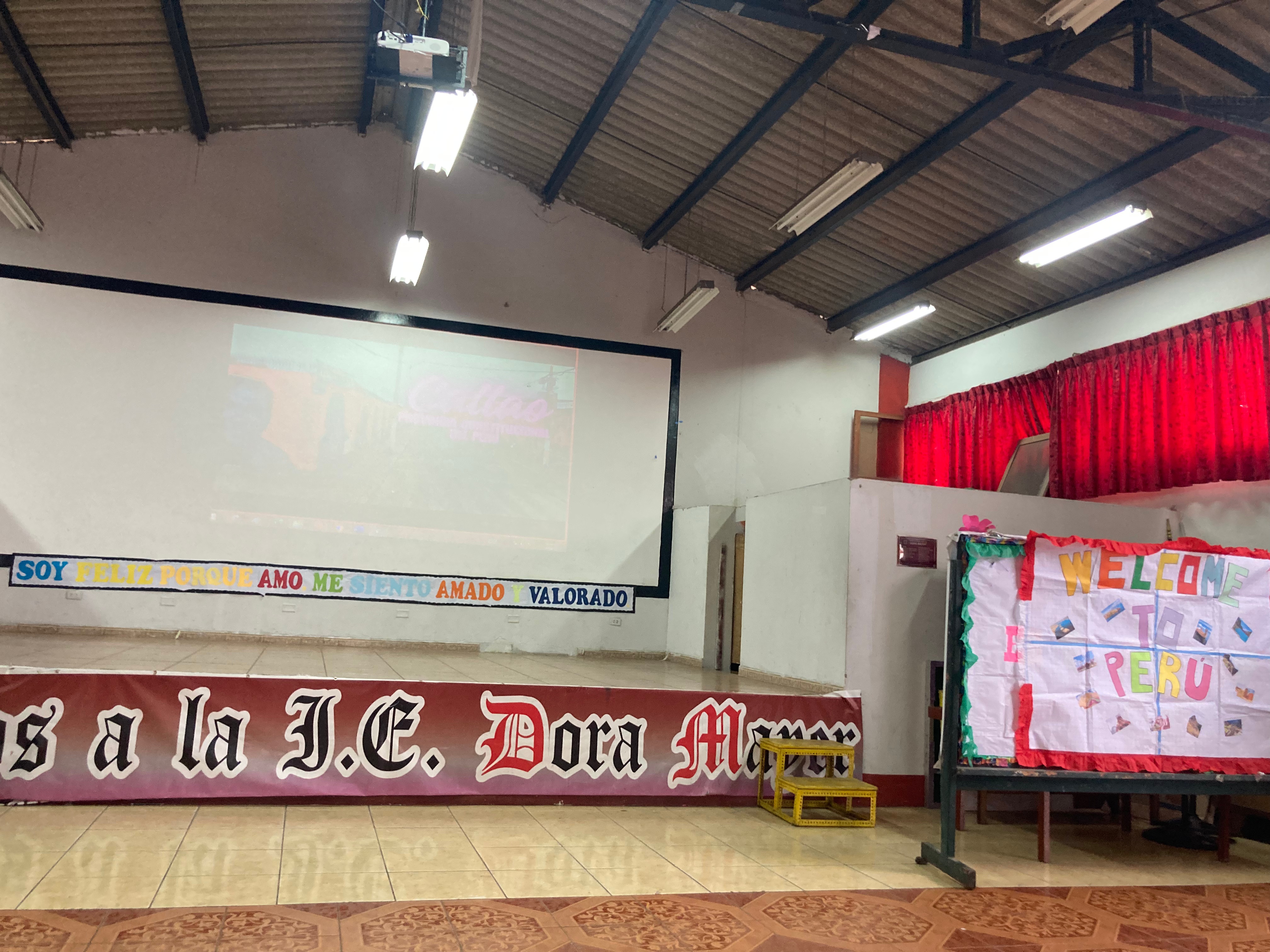
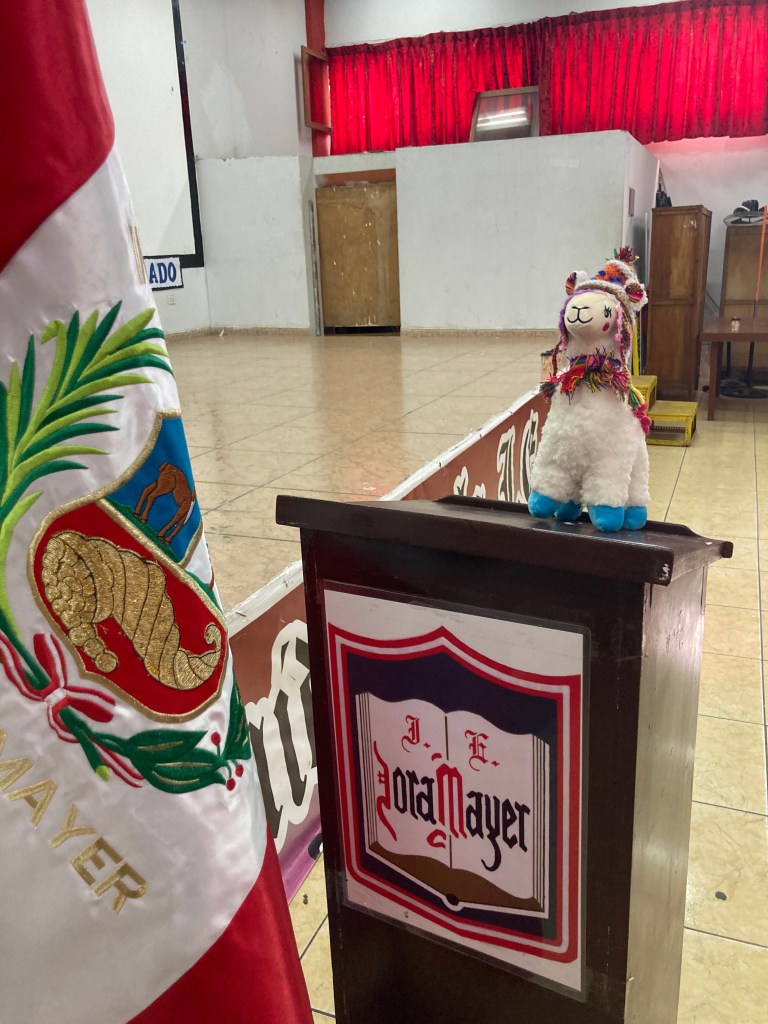
Toward the end of our day at Dora Mayer, we were only there for the morning shift, we gathered in the auditorium where the school officials graciously thanked us and told us how they were trying to have Callao become a more bilingual county. Currently at Dora Mayer, the students in primary school do a Sing, Play, Learn English format which is a great introduction to English without the formal instruction. Regardless of the lack of formal English instruction, I noticed that most of the primary students had more English knowledge than some of the secondary students, even though it is the secondary students that receive formal education in English.
Before we left this beloved school, I was handed about 50 business cards from students. The kids at that public school were truly SO ecstatic to have us there and it was an honor to connect with them all. After my first moments being there, I knew Dora Mayer was a school I would continue engaging with via a Peru return trip and a classroom language exchange. That’s how special it truly was, and how called I felt to continue contributing to this community. The hospitality and generosity was overwhelming and truly eye opening to know how much our presence meant to the teachers and students.
Nick, a fellow Fulbrighter, followed my lead a few times throughout our day at Dora Mayer and on the bus he told me,
“You are exceptional. I have learned so much from watching you interact with kids. You’re ability to make every child feel special and seen is truly remarkable. You are making me rethink how I want to interact with people during the rest of my time in Peru”.
Wow. Just wow. I was shocked by his statement because it was truly just me being me. But it seems that me just being me might be making a difference? I’m not sure, but it was nice to hear.
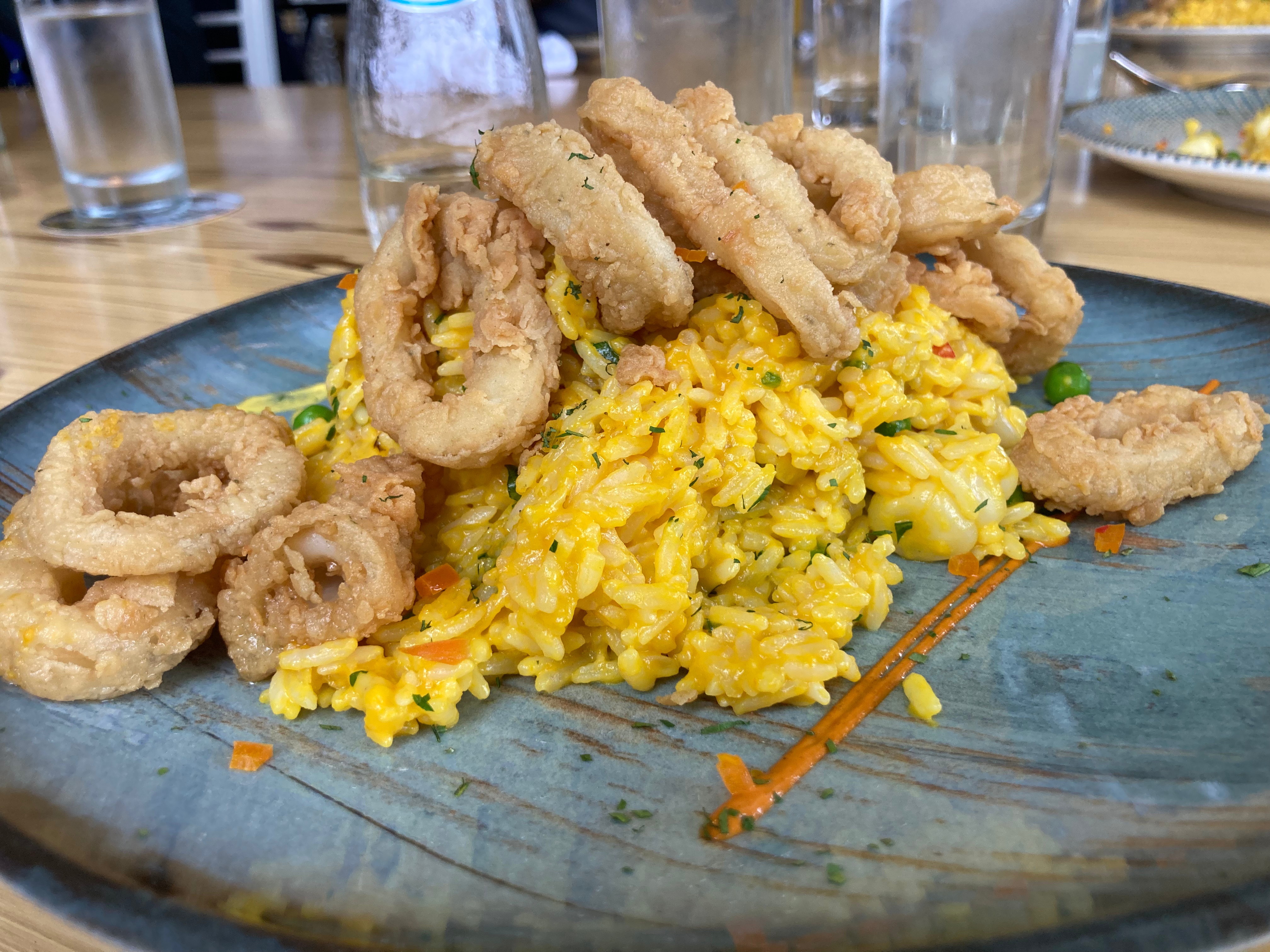
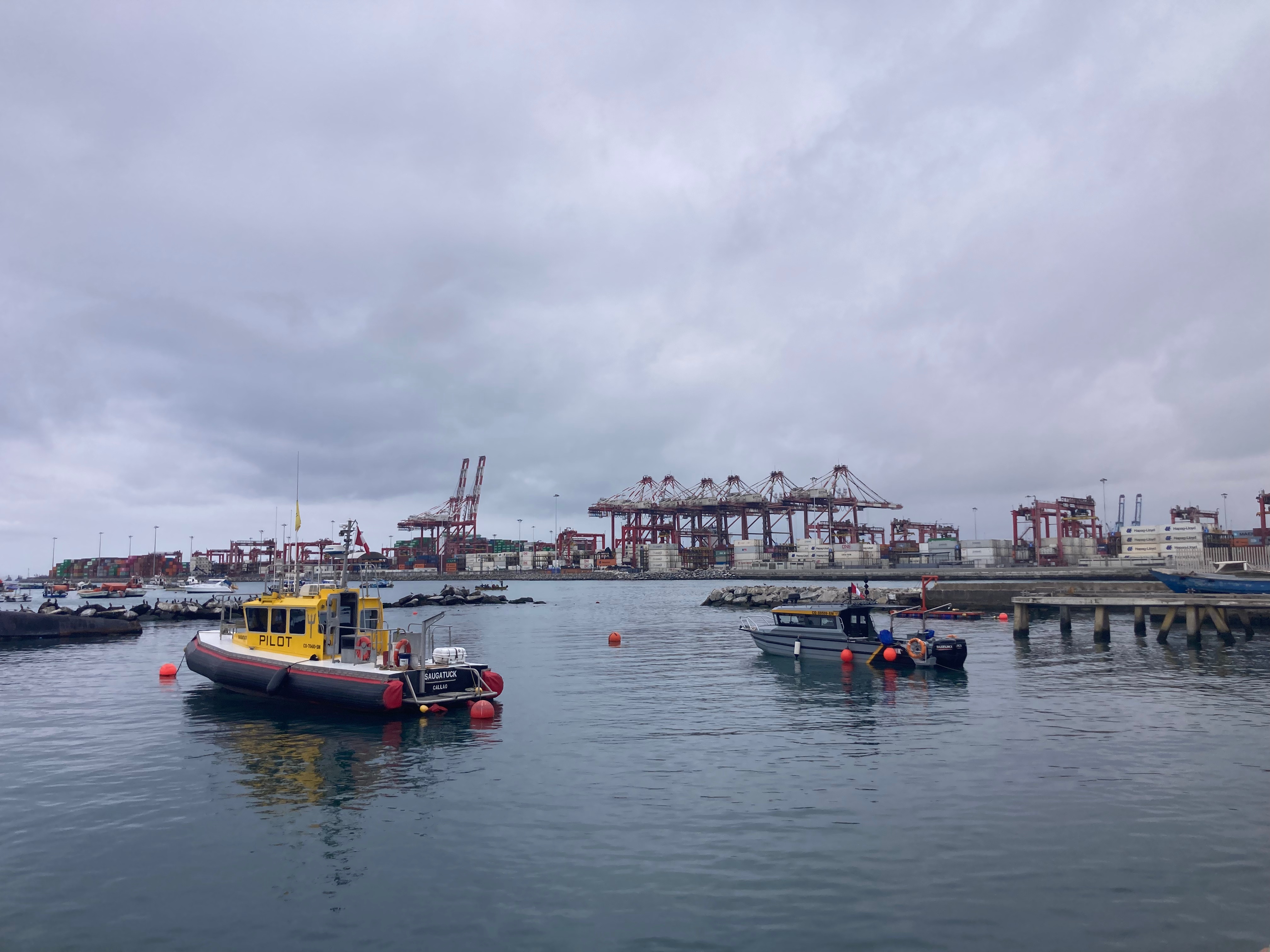
After a huge calamari and rice lunch on the waterfront in Callao, we made our way to the afternoon shift at our second public school. This was a similar layout to the last school where there was definitely a lack of physical resources; however, the students attitude and abilities reflected far beyond that.
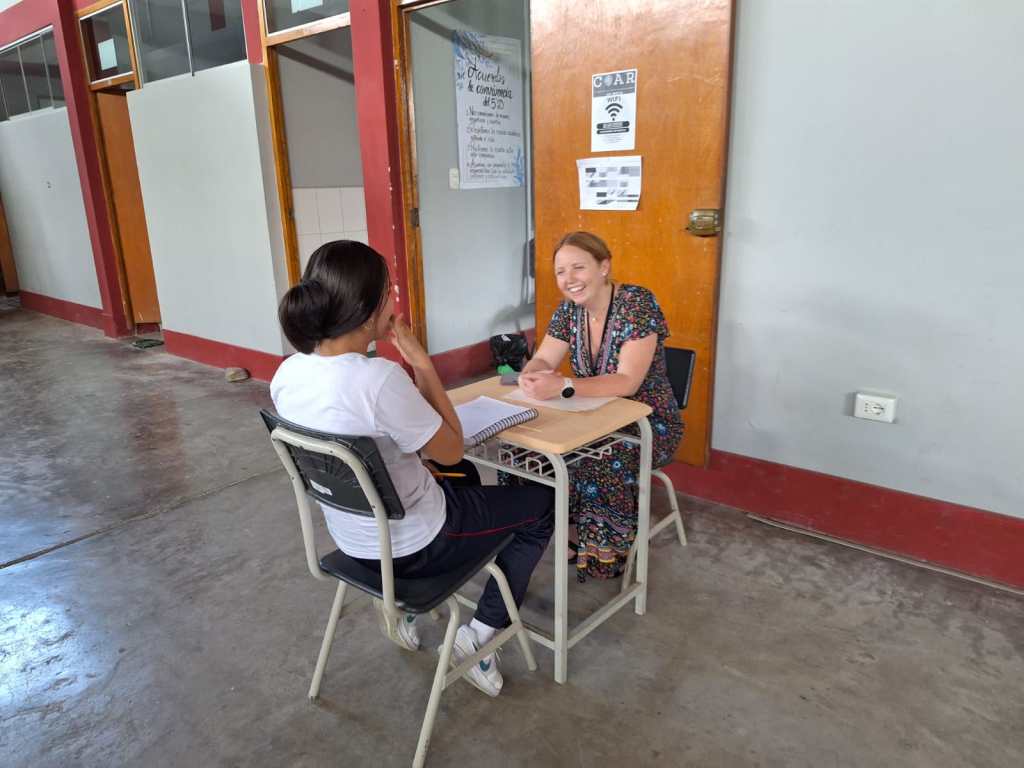
Similar to the last school, we were initially separated from the students by chairs so I broke the formation and approached the students 6 seats behind me. I sat with them, talked to them, and connected. Eventually other teachers followed my lead. In my eyes, I am not here for the formalities….I’m here for the kids and I want to spend as much time getting to know them as possible. During that time, a few students approached me independently and wanted to share some English presentations….it was so sweet!
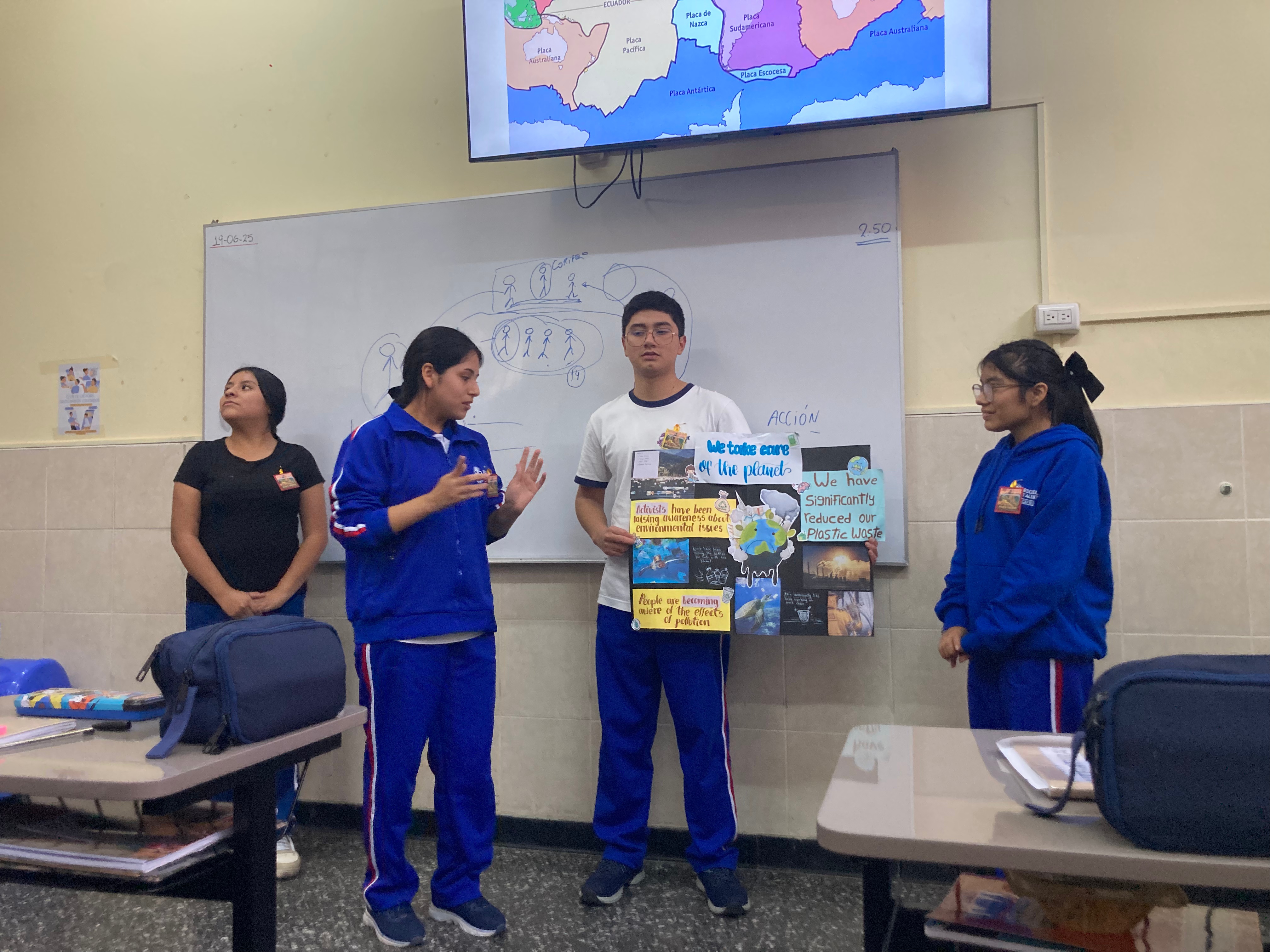
One student sounded like she was giving her pitch to a dance academy, other students shared a project about the Earth, sang a song about Jesus, or shared stories about their lives. For example, one student shared about moving here from Venezuela when she was 6 and how hard that was to be a migrant in Peru at first but now Peru is home. Her wisdom was beyond her years.
Every student that I encountered all spoke WONDERFULLY! I was truly, truly blown away and so impressed with their confidence public speaking in a second language; it was an honor to hear their stories. Again, this visit much like the last, reminded me that although public schools may not always have the best of everything, but they can make the best out of ANYTHING! And these kids, they sure were the best, making lemonade out of lemons. Until next time!










 Regn Around the World
Leave a comment