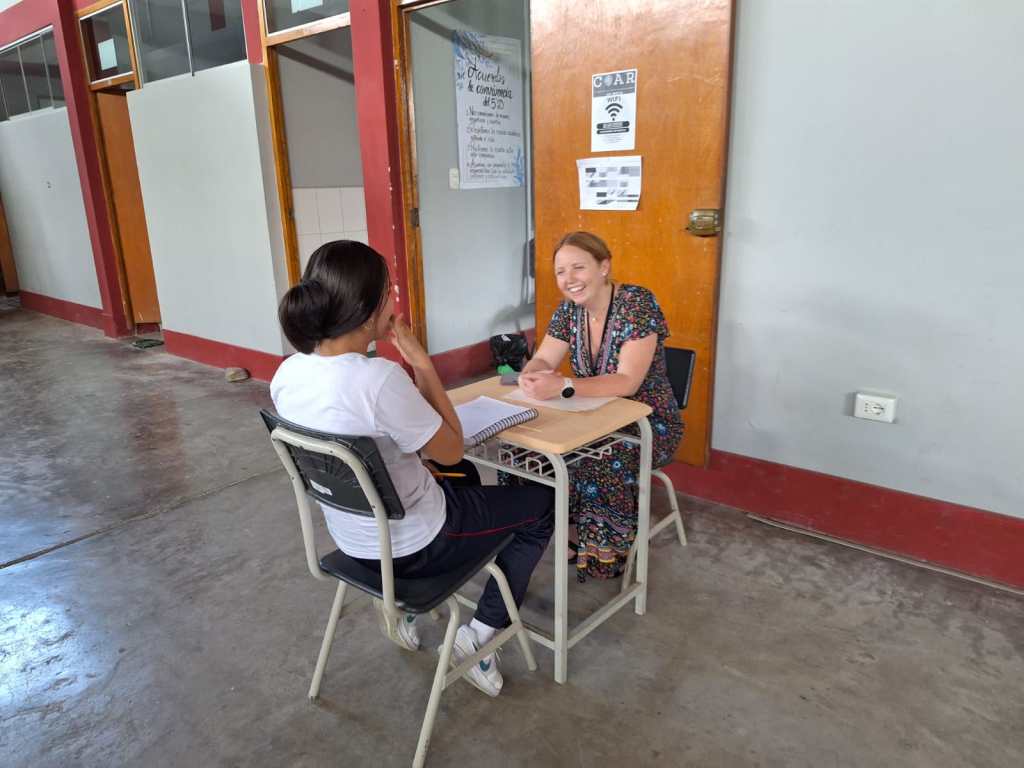
Over my two week experience in Peru one reoccurring motif was that the COAR schools were a prized program in Peru. A COAR school specifically targets students in all regions of the country who typically have limited access to opportunity due to low socioeconomic status or geographic isolation and provides them with a free high quality IB, international baccalaureate curriculum, and opportunities to pursue fields and jobs they may have not been able to previously pursue without this educational opportunity.
COAR schools are free public boarding schools designed for high school students ages 15-17. Due to this type of intense curriculum, expectation, and being so far away from home COAR staff focus not just on academics, but the students mental and emotional well-being as well. There are counselors on campus and students are given various tools for support as they balance academics, living, and their teenage years.
Every student in order to get into this intensive program needs to show strong grades/academic knowledge, as well as pass a psychology assessment to show they will be well-suited for this type of environment. It is a very prestigious and highly competitive program and most families exude immense joy after their child’s acceptance.
In Peru, there is no requirement for students to receive a foreign language like English in primary school, so many times secondary school is when students are receiving their first exposure. To get into a COAR school, students’ English ability is taken into consideration and they need to meet some bare minimum English requirements. With that being said, if I were to compare students’ English understanding to a U.S. WIDA scoring scale, where a 4.5 would be considered a basic English proficiency for academic and social success, most students would arguably enter into a COAR school at a 1.5 or 2 point WIDA English proficiency score. Due to this knowledge, my interest as a multilingual learner teacher was immediately heightened and I wanted to ask, learn, and observe how Peruvian educators motivate their students to pursue a second language?

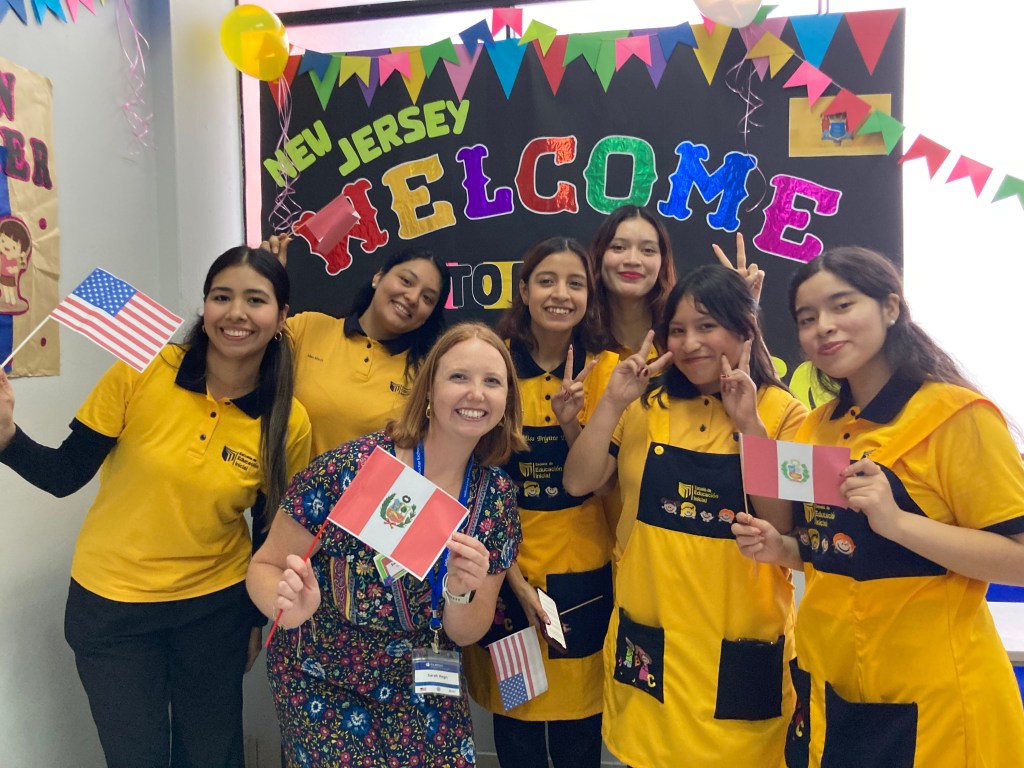
During my placement in Moyobamba, I was graced to coteach with Julian, a Peruvian COAR English teacher who had been teaching for over twenty years. I joined Julian in second-year classrooms where I led presentations about New Jersey, shared postcards my students made with English QR codes so they could hear them speaking, and led “speed talking” discussions based on novels the class was currently reading. For these sessions, Julian asked me to discuss and ask students questions about The House on Mango Street and The Giver. Although some students struggled with speaking, I was thoroughly impressed by the students’ level of English and understanding of the text to answer some fairly complex questions for a second language learner. Through conversations with students, I found that a majority of them found speaking to be the most intimidating concept in English.
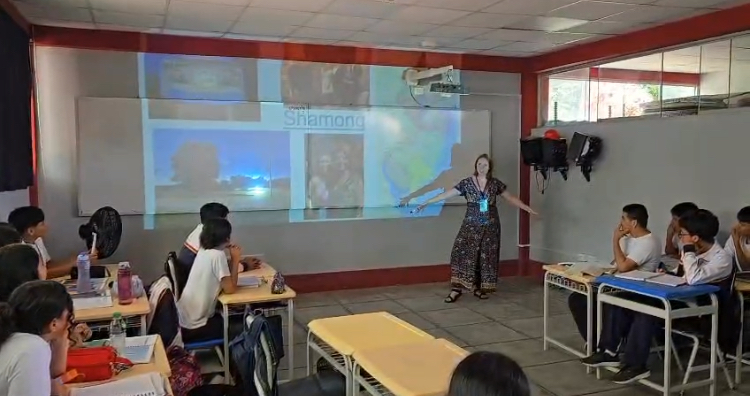
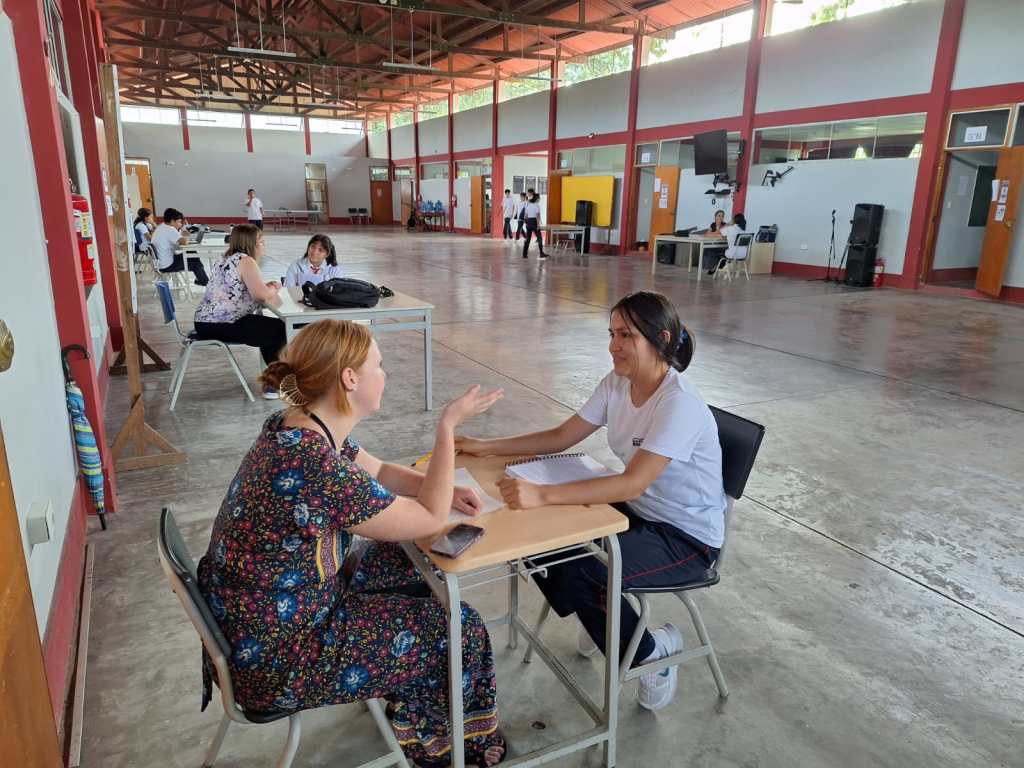
Often speaking English is so intimidating for second language learners because they don’t often get a lot of opportunities to practice their English, especially with a native English speaker. Currently at my school, I have found that our multilingual learners often feel the most confident speaking English because they hear and speak English every day in school. Regardless of students’ potential intimidation to practice their speaking, they all did a phenomenal job and pushed past their initial fears. As we were “speed talking”, I also used various strategies to reword the questions, use gestures, or pull from background information to better support their individual level of English understanding.
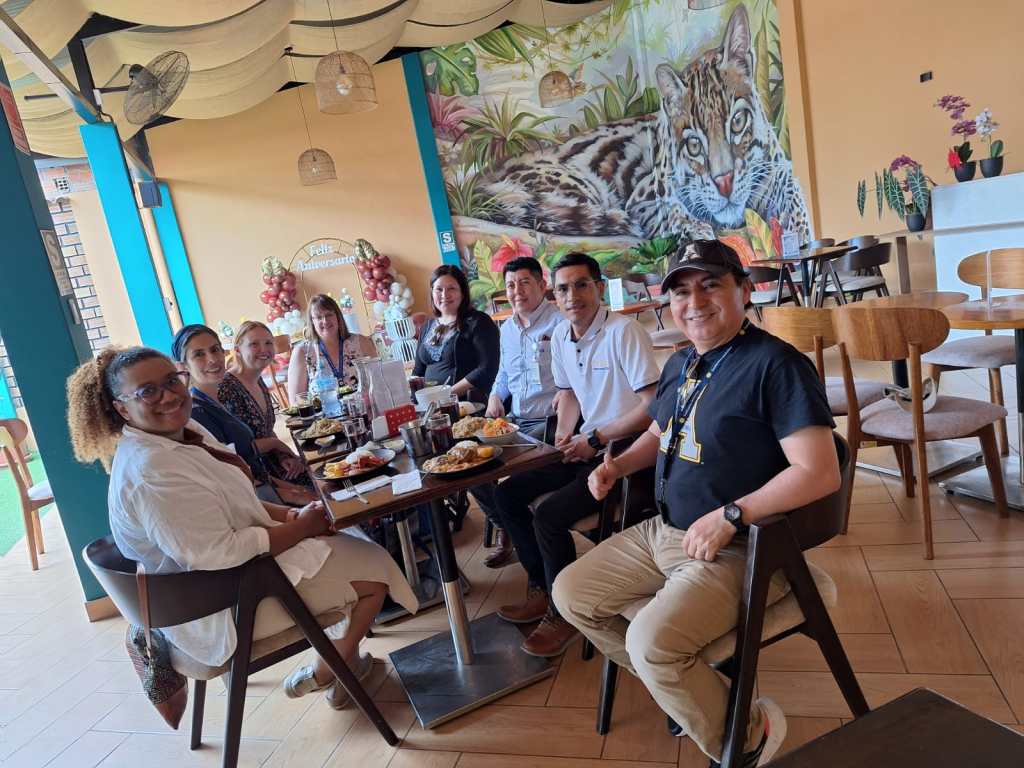
Something I found interesting was although the students were expected to speak, listen, write, and read English nearly fluently by the end of their third year at COAR, most students entered with a very limited amount English. Therefore, during our professional development together, COAR English teachers often asked us what strategies we used to support our own students’ English development. Each of us offered different input such as pulling from students’ liked interests, using multi-media to merge concepts with a visual representation, and incorporating phonemic awareness daily to help scaffold instruction.
Just as we shared strategies and resources, I also learned a lot from Julian and how he supports his students’ writing with artificial intelligence or AI. If I am being honest, I often feel skeptical about the use of AI in the classroom, simply because I believe if not taught properly it can be used as a crutch where students rely on technology before relying on their own skills and brain power. With that being said, I am pleased to admit that Julian started to change my mind about that.
For a book like The Giver, he may give the students a prompt to answer, like an essay on the character development of Jonah, and will teach them how to use AI as a tool when editing. First, students will start with a paper and pencil and write the bones of their essay. Next, students will type their essay into AI and students will specifically ask AI to edit and fix any mistakes. Next, students will print out the feedback AI gave them. Then they will go back to their paper and pencil and revise their paper. After that, a peer will look at the original essay, as well as the editing from AI and provide additional feedback. Lastly, students will rewrite their essay. When they are finished, students need to submit their finalized paper, all of their editing, as well as the feedback they received from AI.
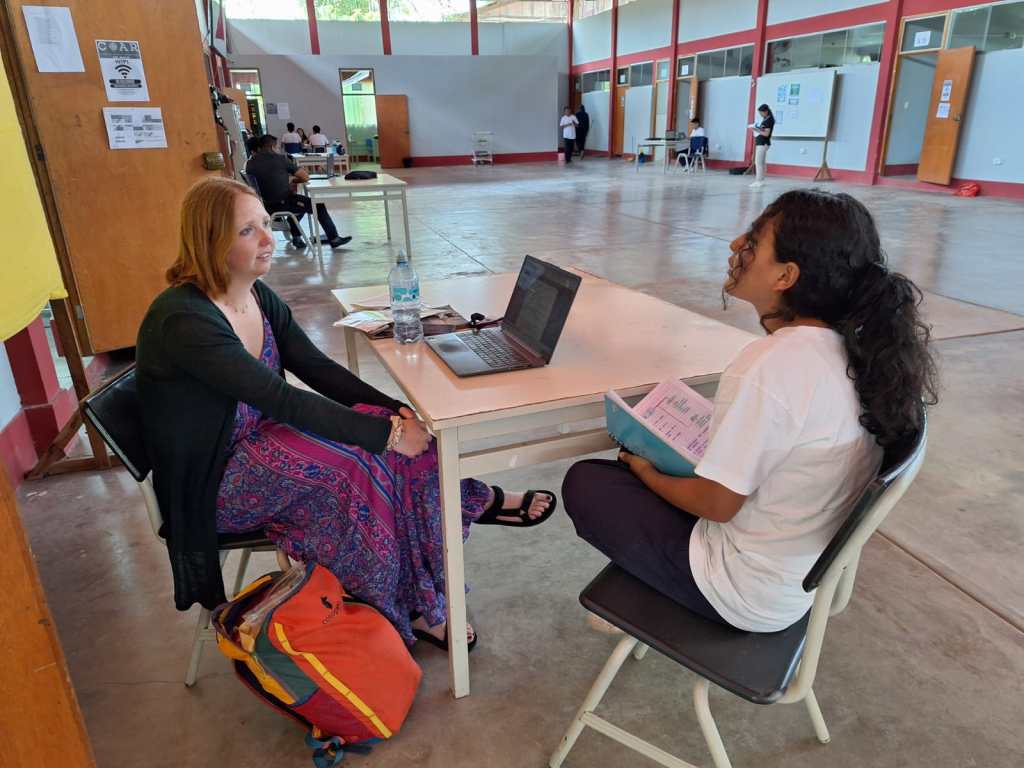
Something I appreciated about this model of editing is that students were continuing to learn that writing is a process and they need to constantly revise, edit, and rework. I find this model is also beneficial for a non-native English speaker because students first write the essay themselves, next they receive immediate feedback on their writing, lastly they can ask AI to explain the edits. Through this process, students may notice common mistakes they continually make and can begin identifying it for themselves overtime. Thinking about my multilingual learners in school, I would say a large focus for the upcoming school year is on the writing and editing process. Looking forward, I am excited to take some of these ideas from conversations with Julian and other Peruvian English teachers and incorporate them with my own multilingual learners. Collaboration truly is where the best conversations and ideas ignite! Thank you Julian and team 😊
Peace & Love,
Sar
 Regn Around the World
Leave a comment